Physical Address
304 North Cardinal St.
Dorchester Center, MA 02124
Physical Address
304 North Cardinal St.
Dorchester Center, MA 02124
from Ana B. IbarraCalMatters

This story was originally published by CalMatters. Sign up for their newsletters.
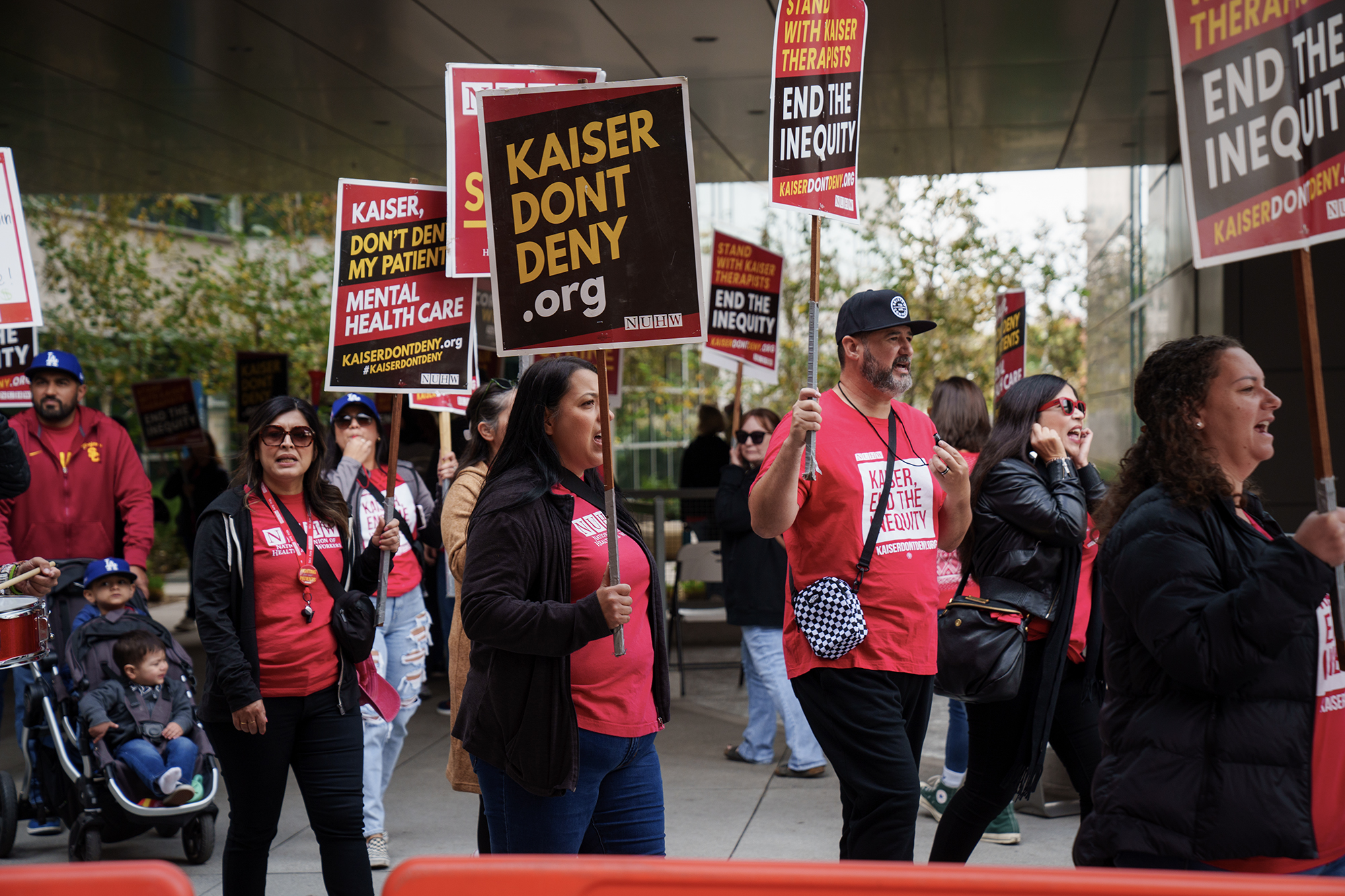
A health care workers’ union has accused Kaiser Permanente of screening patients and making recommendations for care through a “digital, automated algorithm” without clinician oversight, a practice the union says violates state law.
The complaint, filed with state regulators by the National Union of Healthcare Workers, targets the integrated healthcare provider’s electronic visit screening tool, which assesses patients it believes may be experiencing anxiety or depression. Patients answer a multiple-choice questionnaire and the tool “automatically and instantly generates recommendations for care and referral pathways based on the answers provided,” the complaint states.
It’s not necessarily an appointment with an in-person therapist: Referrals also include referrals to virtual therapy, health education classes and self-care apps, according to the complaint.
The union represents therapists and social workers among other health care workers at Kaiser facilities. According to the Department of Managed Health Care, which oversees health plans, this is the first time a union has filed a complaint against a health plan related to its alleged use of algorithms and artificial intelligence in behavioral health.
Union members say they’ve seen no evidence that licensed mental health clinicians review e-visit patient responses in real time, or at all, before the tool issues recommendations for follow-up care. At a San Francisco Board of Supervisors hearing on the issue last week, therapists and social workers said digital automated screenings cannot replace a doctor’s assessment.
“Artificial intelligence and algorithms don’t pick up what trained people can,” said Ilana Marcucci-Morris, a therapist and member of the union’s negotiating committee. She notes that people with depression tend to minimize their symptoms — so an algorithm relying solely on the patient’s responses could miss signs of a more serious condition.
Kaiser missed last week’s hearing. But in a statement emailed to CalMatters, Kaiser rejected the union’s characterization of its behavioral health processes.
The e-visit tool “does not use AI to diagnose patients, make clinical decisions or determine medical necessity. Clinical decisions remain with licensed health care professionals,” said Lena Howland, a Kaiser spokeswoman. She did not provide further details about the technology behind the tool.
Howland said patients can still reach a live person by calling a phone number displayed during the e-visit process. The online screening tool “is an additional pathway to getting care — not the only pathway,” she said.
In a blog post from last yearKaiser describes the e-visit tool as increasingly popular, especially among younger members, and available for about 30 health conditions. In the post, Kaiser says that patient responses are “reviewed by a health professional” and that members “receive a response via secure message within 4 hours and usually sooner.”
Union leaders counter that referrals for care usually come almost immediately after the questionnaire is filled out. They argue that no clinician can realistically review patient responses that quickly.
The union is challenging Kaiser’s screening practice violates state lawwhich requires medical decisions to come from a licensed medical professional and prohibits “artificial intelligence, algorithms, or other software tools” from replacing that judgment.
The Division of Managed Health Care said it has received the union’s complaint and is investigating. “Details of ongoing law enforcement investigations are confidential in accordance with the law and to protect the integrity of the investigation,” the department said.
The complaint comes in the middle of contract negotiations between the health care union and Kaiser Northern California, which have dragged on for more than a year without an agreement.
Therapists and health care workers who spoke at last week’s hearing said a new triage system, including the e-visit tool, began in 2023. Before that, Kaiser’s specialized triage teams of licensed clinicians — who could pick up cues like tone of voice — took patients’ brief histories over the phone, screened them for self-harm and provided a preliminary diagnosis and next steps in care.
The union now says clerical staff or the tool do most mental health triage. The health union filed an application a separate complaint last year alleging that Kaiser used telephone service representatives instead of clinicians to answer mental health calls.

Marcucci-Morris said she typically sees patients about two weeks after Kaiser’s new system triages them. “The acuity and critical nature of the symptoms I see have increased significantly because the app, AI, algorithm or unlicensed operator misjudged that they could wait 10 days to see me,” she said.
San Francisco Supervisor Chyanne Chen said she called the hearing last week because of concerns she heard from constituents — both Kaiser employees and patients — about the healthcare giant’s mental health services. Kaiser serves approx a third of the population of San Francisco.
Chen called Kaiser’s absence from the hearing “unacceptable” and said it left many of her questions unanswered.
“As a San Franciscan, I’m not against technology,” Chen said. “For me, it’s about making sure we don’t reduce the quality of our care and our safety.”
It’s not the first time Kaiser missed a hearing on its mental health services. Last year, state lawmakers criticized the health plan after it refused to participate in an informational hearing about its behavioral health services.
Kaiser’s mental health issues are well documented. In 2023, Kaiser agreed to pay a $50 million fine and invest $150 million to improve its programs in exchange for settling state findings that its behavioral health patients experienced serious delays in care. In 2021, California regulators saw a spike in behavioral health-related complaints, prompting regulators to conduct a study that led to the settlement. Kaiser now works under corrective action plan and must submit quarterly progress reports to the state.
In 2014, state regulators fined Kaiser $4 million for long waiting times between therapy appointments. Kaiser largely credits his past problems to a shortage of care providers.
The health plan has also faced growing criticism over its broader use of AI and digital tools in care.
Kaiser mental health workers have objections to transcription tools that record patient encounters, saying the company won’t disclose how it uses or shares the data. Separately, call center nurses also expressed concern about Kaiser using AI and software to monitor their conversations.
Supported by the California Health Care Foundation (CHCF), which works to ensure that people have access to the care they need, when they need it, at a cost they can afford. Visit www.chcf.org to learn more.
This article was originally published on CalMatters and is republished under Creative Commons Attribution-NonCommercial-No Derivatives license.


