Physical Address
304 North Cardinal St.
Dorchester Center, MA 02124
Physical Address
304 North Cardinal St.
Dorchester Center, MA 02124
from Deborah BrennanCalMatters

This story was originally published by CalMatters. Sign up for their newsletters.
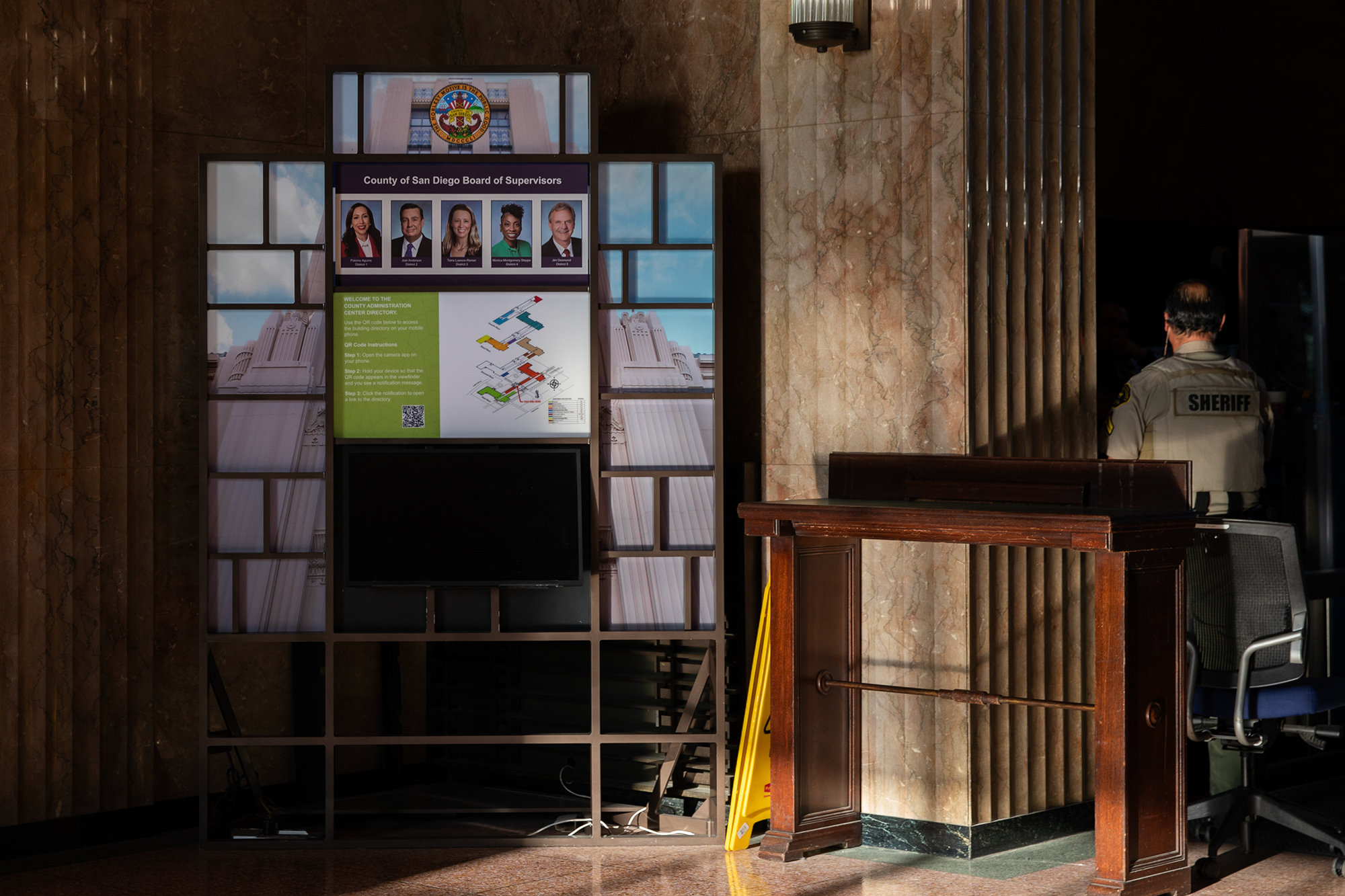
San Diego County Board Chairwoman Terra Lawson-Remer has proposed a plan to reform the county charter by adding an ethics commission, fiscal watchdogs and an open budget process while giving supervisors longer terms and more voice over top staff.
She aims to improve what she called a “gigantic county bureaucracy of 20,000 people” that “doesn’t seem to be working for voters.”
If San Diego voters give the go-ahead in the November election, Lawson-Remer said it would modernize the county’s governance and bring it in line with other large counties in California. Los Angeles County is overhauling its government after voters approved a charter reform measure in 2024, while San Francisco is considering a charter amendment.
Lawson-Remer argued the proposed changes would make San Diego County more efficient, allowing supervisors to better manage its $8.6 billion budget and serve 3.3 million residents. And she believes it would position the county to respond to sweeping federal changes and budget cuts under the Trump administration, which has slashed funding for homeless programs, health care and food assistance.
“We’ve really tried to look carefully at how to make government accountable and prioritize good governance at the local level because nationally we’re in a difficult situation,” she said.
Lawson-Remer said the reforms would not add additional costs to taxpayers and would instead use existing resources and modernize outdated structures to reduce “inefficiency, duplication and waste.”
Critics say her plan goes too far and would give the oversight board too much power. On Saturday, her fellow Supervisor Joel Anderson offered a counterproposal; he also supports the oversight positions, but wants to limit oversight authority over top administrators and apply longer-term limits only to future incumbents, not the current board.
“My revised measure takes a more collegial approach: focused, transparent and based on what you actually asked for: real reform, not a hasty power grab,” Anderson said in a statement.
Lawson-Remer’s proposed charter reform has five main components. It would create an independent ethics commission with powers over elected officials that could hear complaints ranging from financial conflicts of interest to allegations of sexual harassment. The commission will have the power to subpoena witnesses and will be required to make its findings public.
She also wants to create new positions for a nonpartisan budget analyst to report to the board and an independent program auditor to evaluate whether county programs in areas such as homelessness, mental health and jail services are delivering the expected results.
For example, she said, “if you spend money on homeless programs, how many people are you helping per dollar and are you going to get them off the street permanently or just for a few days?”
Her proposal also calls for county department heads to present budget requests directly to the board during public hearings, where they would explain their program needs and spending requests.
Under the existing system, the county administrative officer develops the budget and presents it to the board as a completed document. Breaking it down by department would allow supervisors to gauge earlier and shape the budget before the spending plan is solidified, Lawson-Remer said.
She also wants to authorize supervisors to hire and fire some top county employees, instead of leaving those appointments up to the chief administrative officer. Under her plan, the board would confirm appointments to the assistant and deputy CAOs, director of emergency services, public health officer and public defender. It may also require the public protector to report directly to the board instead of the CAO.
Finally, the proposed charter reform calls for extending the terms of supervisors from two four-year terms to three, for a total of 12 years. Lawson-Rimmer said that would bring San Diego County in line with state legislative limits of 12 years and other counties like Los Angeles that allow three terms.
It would also apply those restrictions to other elected officials, including the sheriff and district attorney, but only if state law is changed to allow it. Under current state law, these countywide positions cannot be subject to term limits.
Lawson-Remer said 39 organizations contributed to the proposal and the final recommendations represent modest changes to make the district more efficient without disrupting its existing structure.
“Some of the ideas that were on the table were pretty big changes and they were eliminated in favor of thinking carefully, doing the smallest things possible to make moderate changes to make government work and make government as accountable as possible to voters,” she said.
Other large California counties are making more dramatic changes to their governmental structures.
For example, in 2024 Los Angeles County voters passed a charter reform measure that introduced open budget hearings and a similar ethics commission in San Diego. But it goes much further.
The Los Angeles charter reform measure also adds an elected county executive, sort of like a countywide mayor, who would lead government departments, develop the budget and lead emergency response. It expands the board from five to nine seats and creates a charter review commission that will meet every 10 years to consider further changes.
“People are frustrated with the status quo,” said Supervisor Lindsey Horvath, who spearheaded the charter reform. “They have lost faith in government, they see corruption and they want accountability.”
The reform was long overdue, Horvath said.
“We haven’t changed our governance model since 1912, when there were more cows than people and when women didn’t have the vote. We know the reality in 2026 is vastly different than the last time the county looked at the governance model.”
The voter-mandated changes have been phased in over a decade. Los Angeles County started open budget hearings last year and is now starting the second round.
“The budget process here has historically been pretty opaque,” Horvath said. Now, “It’s a much more rigorous, robust public process,” in which department heads present their programs and staffing needs over several days of public hearings.
Los Angeles County is creating an ethics commission now and will introduce a county executive in 2028.
In 2031, after the next redistricting cycle, Los Angeles County will be divided into nine districts, and elections for these offices will begin in phases beginning in 2032.
The fact that the watchdogs called for a dilution of their own powers was a source of astonishment to some observers; the civic organization Zócalo Public Square highlighted this paradox in a commentary titled: “The LA Miracle: Politicians Seek to Shrink Their Own Power.”
Horvath argued the additional seats are needed to ensure the supervisors can adequately serve their districts, which now number about 2 million people each in the county of 10 million. She believes adding a county executive position “creates healthy checks and balances.”

By contrast, San Francisco, which operates as a consolidated city-county, is considering changes that would concentrate power at City Hall. Mayor Daniel Lurie said these reforms will streamline management, arguing that the current system “locks down red tape, distracts from accountability, and protects the status quo.”
One provision would give the mayor sole authority to hire and fire most city department heads and appoint deputy mayors to oversee some policy decisions. Another would give the city administrator the authority to make changes to city purchasing laws. A third measure would increase the signature requirement for citizen initiatives from 2% to 8% of registered voters.
Public speakers at last month’s San Diego County Board of Supervisors meeting were divided on the merits of charter reform.
Some speakers applauded the supervisors’ goals of transparency, accountability and independent oversight, but said empowering the board to hire and fire supervisors and other top county leaders would undermine that. Critics have opposed extending terms for supervisors, saying two terms is enough time to get the job done.
Others argue that the county’s charter is broken and in need of updating. Courtney Baltiski of the Tijuana River Coalition said the county’s inefficient systems have hampered efforts to fix toxic sewage pollution in the Tijuana River.
“For too long there has been uncertainty about health impacts, about who is responsible and about how to actually move solutions forward,” she said.
The three Democratic supervisors — Lawson-Remer, Paloma Aguirre and Monica Montgomery Stepp — voted to approve the charter reform measure, which will return to the board for a second reading on May 19.
Republican Supervisors Joel Anderson and Jim Desmond opposed it.
Desmond, who left office this year and is is running for Congresscalled the measure a “self-serving act to put term limit extensions on the ballot for the benefit of these current board members sitting here today,” arguing that the rest of the proposed reforms were included “to bury and sugar coat the extension of terms from two to three terms.”
Lawson-Rimmer called this interpretation “very conspiratorial.” She’s expecting a baby in a few weeks and said it’s out of the question whether she’ll run for re-election in 2028.
“You know what would be really self-serving is if I had a job that included maternity leave,” she said.
Anderson, who is up in 2028, but is running for San Diego County Treasurer-Tax Collector this year said he wanted to approve the measure but opposed implementing the extended term limits for incumbent supervisors. And he disagreed with the board’s authority to confirm or remove senior officials.
Anderson has introduced a competing charter reform proposal, which the board will also consider Tuesday, that would also eliminate potential term limits for countywide officials such as the sheriff and district attorney.
The Board of Supervisors will consider both proposals next week and vote on whether to put San Diego County’s charter reform on the November ballot.
This article was originally published on CalMatters and is republished under Creative Commons Attribution-NonCommercial-No Derivatives license.