Physical Address
304 North Cardinal St.
Dorchester Center, MA 02124
Physical Address
304 North Cardinal St.
Dorchester Center, MA 02124
from Deborah BrennanCalMatters

This story was originally published by CalMatters. Sign up for their newsletters.
At the Wrench and Rodent Seabasstropub in Oceanside last week, two plates of mackerel sushi showcased varieties of the silverfish.
One featured Aji, or Spanish mackerel, a soft fish with a sweet, mild flavor, topped with onion, ginger and soy citrus sauce. Next to it was Pacific mackerel, lightly seared, tart and spicy, with a soy-based glaze and sprinkled with sesame seeds.
Both swam in the Pacific Ocean the day before.
Ultra-fresh seafood is a hallmark of Wrench and ratcheta sustainable sushi bar led by Executive Chef Davin Waite. And they’re the standard for San Diego fisherman Shane Volberding, who hauled in a variety of mackerel, yellowtail and other fish on Tuesday, then headed up the coast to deliver them to local restaurants on Wednesday.
“We’re very, very fortunate to have this abundance of fish and people harvesting it responsibly and (marine) science in San Diego,” Waite said.

Around noon, Volberding arrived at the Wrench and Rodent with a van full of coolers stuffed with ice and fish. He scooped nets of fish into shallow trays, sorting the different species and selecting them for Waite’s order. “So I get the mackerel out, pick the nice big ones out for them,” he said.
The mackerel is freshly caught and immediately killed through a Japanese process called ikejime, which preserves the quality of the fish. Volberding sells it for $8 a pound, and a two-piece sushi order is between $6 and $13, Waite said.
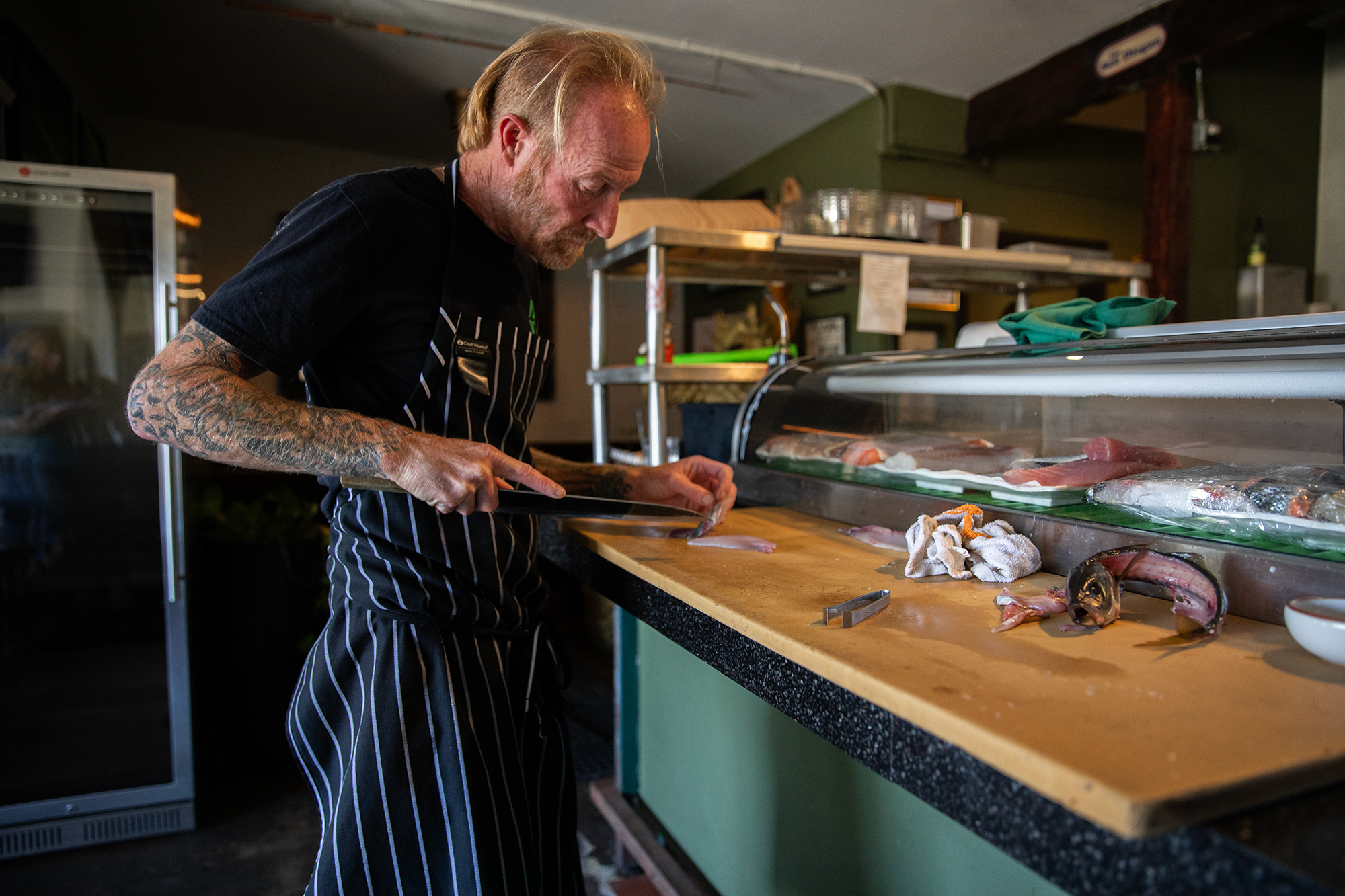
They took the trays to the restaurant, where Waite and his brother, chef Lauren Waite, prepared fish and other seafood for dinner.
Volberding also had six yellowtails, a silvery fish with bright gold fins and a tail that is one of the most popular choices for sushi. But Waite already had one in his dry agara temperature- and humidity-controlled cabinet often used for beef, but which he uses to perfect the texture and flavor of oily fish.
Enzyme aging reduces water and concentrates the fish’s umami flavor, he said, but timing is everything in this process. “You really have to know when that animal was collected,” Waite said.


In addition to unique preparations such as dry aged fish or crispy fried tuna heads, Wrench and Rodent offers a wide range of local seafood: snails, sea cucumbers, shrimp and urchins. This is key to Waite’s philosophy of eating seasonal seafood and using all parts of the animal.
After landing the fish, Waite sliced the Aji fillets and cut fine indentations across the grain to texture the flesh into the buttery texture that sushi eaters expect.
What is the painstaking process of carving a fish called? “Suffering,” interjected Lauren Waite.
Next comes the Pacific mackerel, lightly marinated. “A lot of people think that mackerel is a fish, but not the fish itself, but the process that is used to preserve it,” said Davin Waite. “So you salt and vinegar it.”
Volberding then headed to Take a fish and beer shot in Carlsbadwhich specializes in poke and seafood tacos. There, Volberding sold three yellowtails to chef Steven Williamson for about $13 a pound, or about $220 a fish.
“Locally caught fish has played a huge role in our menu because it’s kind of dependent on what we can get our hands on,” Williamson said.


Catching 50 pounds of yellowtail determines his menu items for the day; tostadas de ceviche and aguachile, a spicy marinated seafood dish. Both retail for around $18.
Williamson quickly cleaned and seasoned the fish, then diced some of it, tossed it with lime juice and spices, and scooped it onto a crisp, flat corn tortilla. He then arranged slices of yellowtail on a plate, tossed them with green chili sauce, and then garnished the dish with avocado, onion, and cilantro.
The relationship between the local fishermen and the restaurant is an essential part of Shoots cuisine and is mutually beneficial. “We like to support local businesses and buy from them instead of buying from the big companies, so they support us,” Williamson said.
This article was originally published on CalMatters and is republished under Creative Commons Attribution-NonCommercial-No Derivatives license.