Physical Address
304 North Cardinal St.
Dorchester Center, MA 02124
Physical Address
304 North Cardinal St.
Dorchester Center, MA 02124
from Carolyn JonesCalMatters

This story was originally published by CalMatters. Sign up for their newsletters.
Cesar Chavez is woven throughout the California social studies curriculum—as a labor leader, civil rights hero, and practitioner of nonviolent protest.
That’s about to change.
State education officials urged teachers Wednesday to minimize Chavez’s role when teaching about the farmworker movement. Labor rights icon and namesake of at least 43 California schools, Chavez was accused Wednesday of a long pattern of sexual violence against women and girls.
“The civil rights struggle of farmworkers and immigrant communities is bigger than one person and continues to be very relevant today,” said Elizabeth Sanders, spokeswoman for the California Department of Education. “We support survivors of violence, including and especially gender-based violence, which has no place in our society.”
The state will also update its history and social studies curriculuman 800-page document that details lesson topics for all K-12 public school students. Students typically learn about Chavez in fourth, ninth and eleventh grades, according to state guidelines, often as a role model and important figure in history. It is also covered in ethnic studies courses.
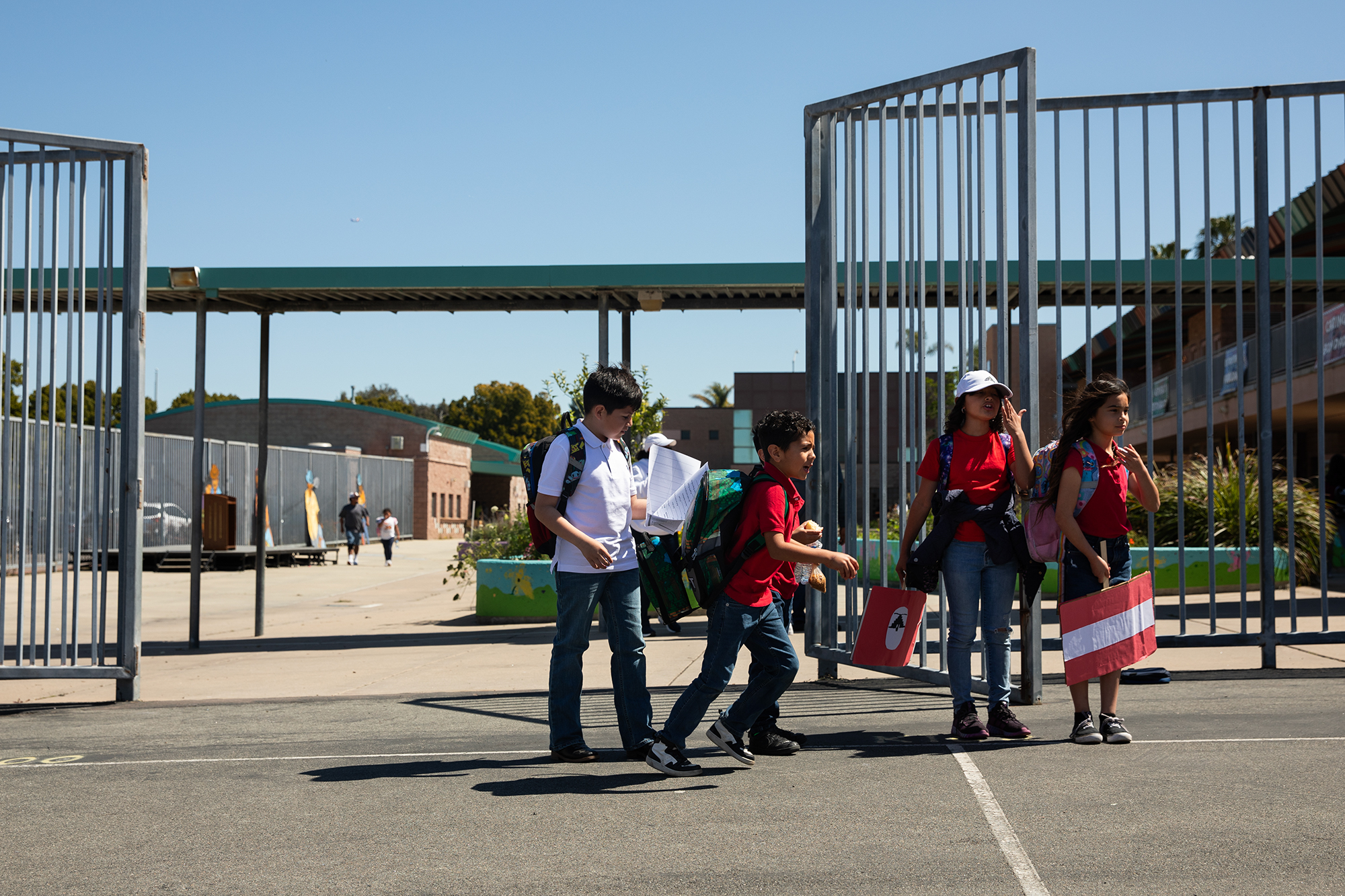
School districts have discretion over how to teach certain topics, and California districts on Wednesday were considering how to approach new information about Chavez, who died in 1993. As Cesar Chavez Day approaches on March 31, countless teachers are now rewriting their lesson plans.
Los Angeles Unified, the state’s largest district, said it would revise its curriculum in connection with Chavez. Latino students make up nearly 75% of the district’s enrollment.
“(The county wants to) ensure that the focus remains on the important work of the farmworker movement and not on any one individual,” said county spokeswoman Brit Vaughn. “It is important to recognize the collective work of thousands who have made progress in social justice, labor rights and community empowerment.”
James Aguilar, a social studies teacher at San Lorenzo High in Alameda County, said he discussed the news with his students Wednesday. And they, like him, were shocked. The students had many questions, but mostly they just wanted to talk about their emotions. Most had grown up in awe of Chávez.
Aguilar was straight with them.
“I feel very personal about this,” Aguilar said. “I believe in survivors and that’s where I’m leaning.”
This is not the first time he has had to rethink the curriculum based on new claims about historical figures. Social research happens in real time and the historical record is constantly evolving, he said.
“I know Cesar Chavez just as a hero, an important leader in the union movement,” said Aguilar, who is active in his local teachers union. “We don’t want to invalidate his work, but we have to pause. There are people who have done good things for our country but have not so good records in other aspects of their lives. We just have to acknowledge that.”
Finding that balance will be difficult — but essential — for social studies teachers, especially as they prepare to mark Cesar Chavez Day, said Morgan Polikoff, a professor of education at the University of Southern California.
Teachers also need to consider the age of their students and what is an appropriate topic for classroom discussions, he said. State and county guidelines should help teachers know how to approach the topic in a way that acknowledges the allegations but doesn’t trivialize the farmworker movement as a whole.
“There are many historical figures who are deeply problematic,” Polikoff said. “The real challenge is finding a way to teach about them that doesn’t ignore the charges but reflects the complexity of their heritage.”
This article was originally published on CalMatters and is republished under Creative Commons Attribution-NonCommercial-No Derivatives license.