Physical Address
304 North Cardinal St.
Dorchester Center, MA 02124
Physical Address
304 North Cardinal St.
Dorchester Center, MA 02124
from Dan WaltersCalMatters

This comment was originally posted by CalMatters. Sign up for their newsletters.
This week — as the U.S.-Iran conflict rages and gasoline prices soar due to disruptions in global oil trade — a political war has erupted in California over proposed air pollution rules that could raise fuel prices even further.
The California Air Resources Board’s new crackdown on greenhouse gas emissions “risks moving manufacturing and related emissions out of state, ultimately undermining both California’s economic base and global climate goals,” says the California Association of Manufacturers and Technology.
Association president Lance Hastings added in a statement: “If these proposed regulations move forward, Californians should brace themselves for higher costs across the board with no end in sight. There’s still time to fix this. CARB and the Legislature must act before it’s too late.”
The proposed regulation “would cripple the survival of the remaining refineries in the state, causing the entire industry in California to lose out to this flawed program,” Andy Walz, a top Chevron executive, said in a statement. Two California refineries announced plans to close and Chevron, which operates two of the remaining plants, has repeatedly hinted that California’s regulatory climate could force it out of the state as well.
However, while business pressured the Air Resources Board to ease the limits, a coalition of environmental groups, including the Environmental Defense Fund, complained that the proposed rules did not go far enough.
“Last year, in the face of federal backsliding, California reinforced its leadership on climate change by expanding its cap and invest program while prioritizing reducing high electric bills and saving households money,” their letter said. “However, CARB’s proposed 2026 amendments to the C&I program do not meet the near-term ambition California needs to be on a consistent and affordable path to achieving its 2045 carbon neutrality goals.”
Meanwhile, 15 Democratic lawmakers released a letter expressing concern that the new rules would raise fuel and energy costs, which are already among the highest in the country.
“This crisis is not a delusion, nor a thinly veiled threat. It is a reality borne by today’s consumers who are historically and empirically the least able to afford it,” the lawmakers said, adding, “California’s climate leadership cannot come at the cost of destabilizing our energy markets and burdening those least able to afford it.”
Interestingly — or ironically — all 15 signatories voted less than a year ago for legislation authorizing the air board to draft the revisions, which were published in January and are due to be finalized in May.
The legislation behind this wave of warnings and complaints is Assembly Bill 1207which emerged from backroom negotiations last September. It quickly passed and Governor Gavin Newsom signed it.
The measure renames the cap-and-trade program to cap-and-invest and extends it for 15 years from 2030, the current expiration date that coincides with the state’s stated intent to make California carbon neutral by 2045. It authorizes the Air Resources Board to adjust emissions limits accordingly.
Until now, the state’s business community has fundamentally supported the auctioning of emissions allowances as a market-based approach, preferable to the direct regulation of emissions that many environmental groups favored.
Capitol Hill politicians also liked the auctions because they generate large sums of money — an estimated $31 billion since 2013 — that should finance carbon reductions. One major recipient is the state a very troubled high-speed train project. However, when the state falls into one of its periodic budget crises, the Greenhouse Gas Reduction Fund has also been used for spending that has little, if any, connection to greenhouse gases.
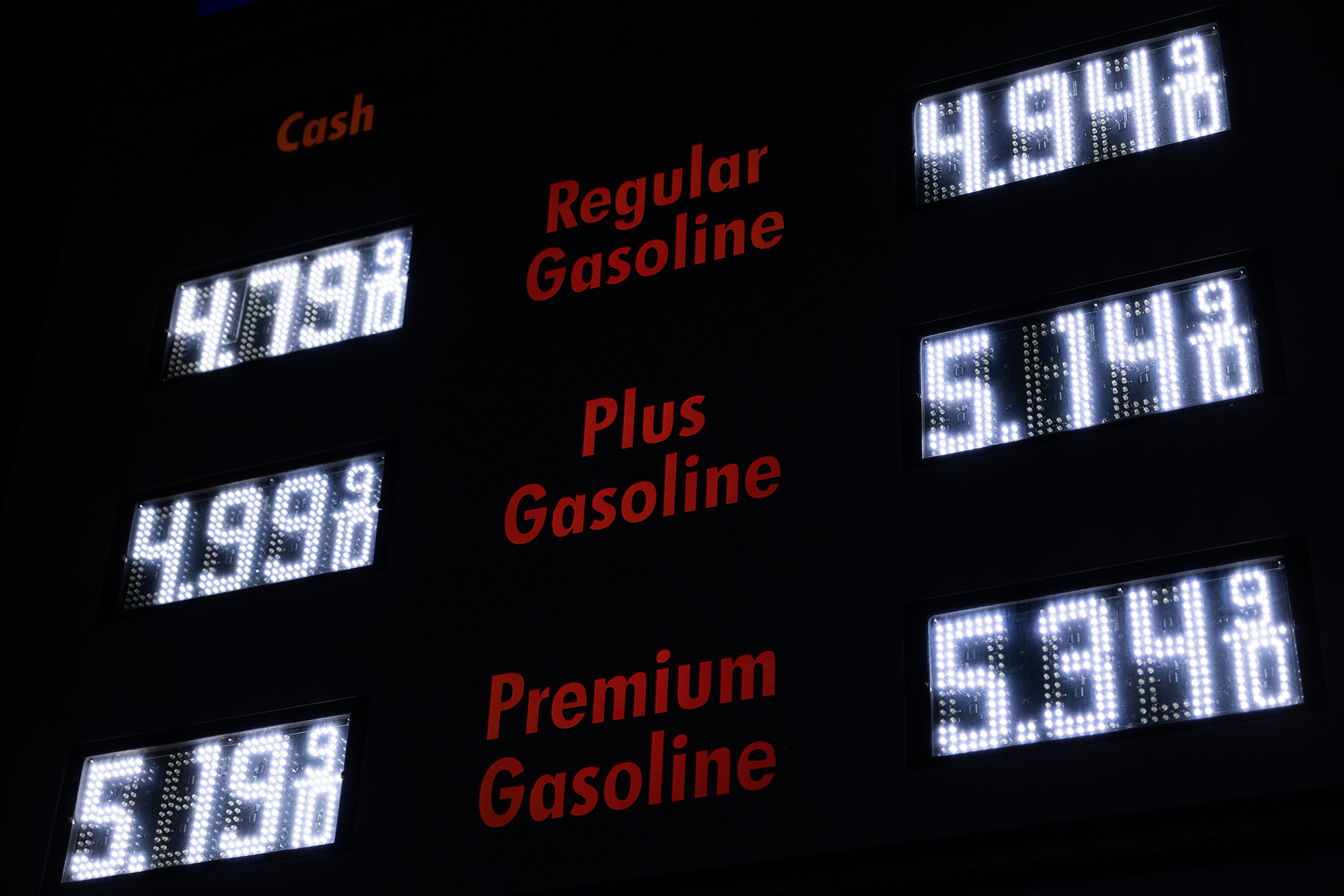
The cost of living is now a a political concern of the first drawerand with gasoline prices topping $5 a gallon in many regions, anything that raises consumer prices even further is bound to become a political football.
This article was originally published on CalMatters and is republished under Creative Commons Attribution-NonCommercial-No Derivatives license.





