Physical Address
304 North Cardinal St.
Dorchester Center, MA 02124
Physical Address
304 North Cardinal St.
Dorchester Center, MA 02124
from Yue Stella YuCalMatters

This story was originally published by CalMatters. Sign up for their newsletters.
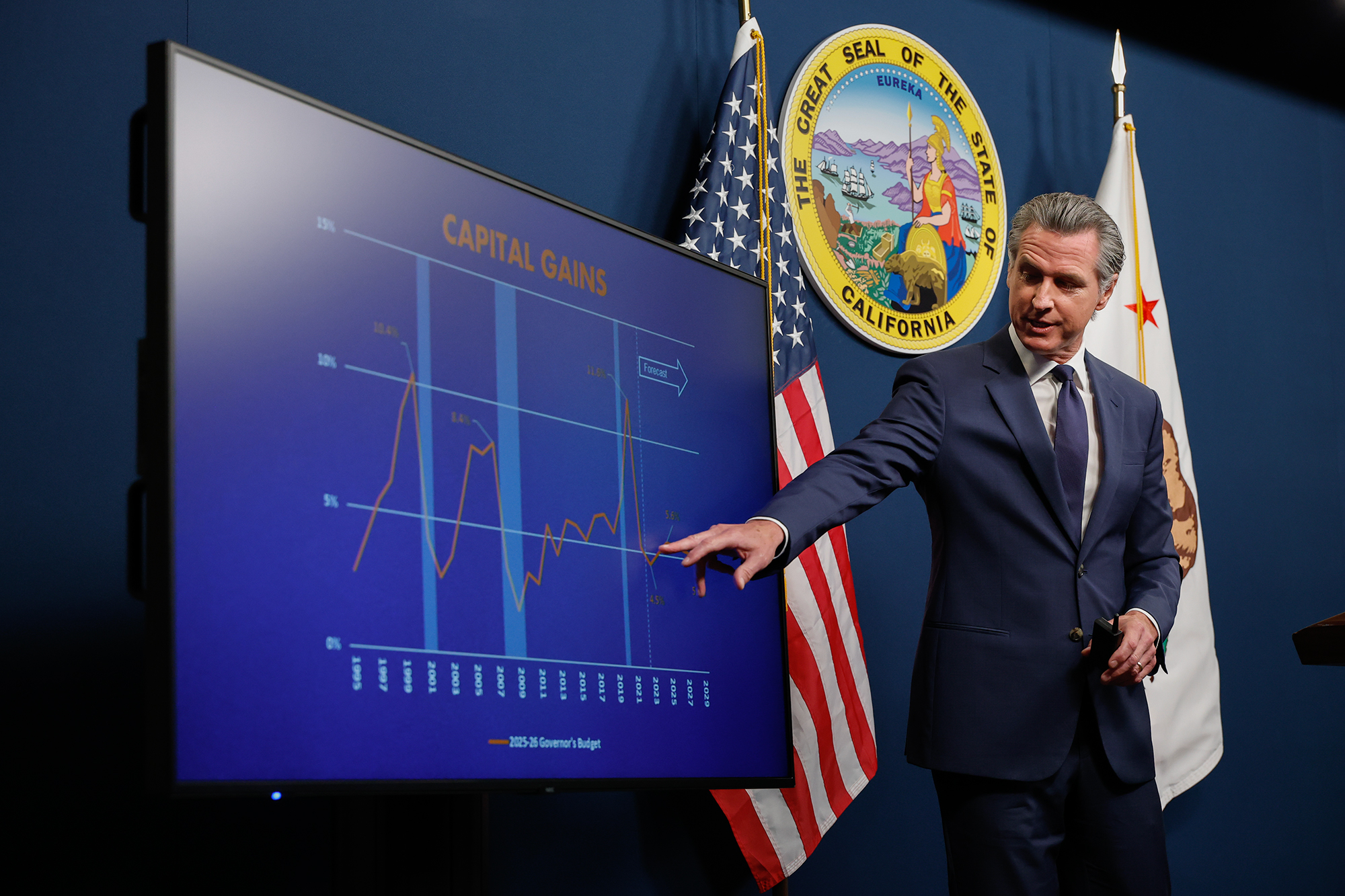
Governor Gavin Newsom opened this year with a rosy forecast: Buoyed by $17 billion more in revenue than previously planned, the state will have a modest surplus of $363 million for the 2025-26 fiscal year, he told reporters in January.
But life turns on a dime.
The wildfires in January that broke out in Los Angeles forced the state to spend billions on disaster relief and tax filing delays for Los Angeles residents. The cost of Medi-Cal, the state’s health insurance program for low-income residents, rose to another $6 billion than expected. President Donald Trump’s on-again, off-again tariff policies rocked the stock marketwhich California relies heavily on for tax revenue. And the state filed a a flurry of lawsuits against the Trump administration over its threat to freeze federal funding for food aid, disaster recovery and other aid.
By May, Newsom is no longer projecting a modest surplus, but a $12 billion deficit.
To plug the hole, Newsom initially proposed drastic cuts to Medi-Cal. But the final budget he negotiated with state lawmakers depended heavily on domestic borrowing, dipping into state reserves and freezing Medi-Cal enrollment for undocumented immigrants to avoid major cuts to other social services.
While Democratic leaders have largely blamed the Trump administration for California’s budget woes, state revenue volatility is nothing new. California is heavily dependent on income and capital gains taxation for high earners, whose fortunes are often at the mercy of the stock market. In 2022, the state posted a surplus of nearly $100 billion, followed by a projected deficit of $56 billion over the next two years.
The deficit is projected to reach nearly $18 billion next year, largely because the state is expected to spend so much money that it will offset, if not eclipse, strong tax revenue driven by the AI boom, the nonpartisan Legislative Analyst’s Office said in its fiscal outlook last month.
If the estimate holds, it would be the fourth straight year of Newsom’s tenure in which California has faced a deficit despite revenue growth.
Worse, the structural deficit could reach $35 billion a year by the 2027-28 fiscal year, the LAO said.
California faces $6 billion in additional costs next year, including at least $1.3 billion because the state must now pay more to cover Medi-Cal benefits under Trump’s budget bill. The state could also lose more housing and homeless funding from the federal government.
How can lawmakers fix it? The options are slim as the state has already taken one-off measures to balance the books. The LAO notes that solving an ongoing structural budget problem requires either finding more sustainable revenue streams or making major cuts, or both.
This article was originally published on CalMatters and is republished under Creative Commons Attribution-NonCommercial-No Derivatives license.

