Physical Address
304 North Cardinal St.
Dorchester Center, MA 02124
Physical Address
304 North Cardinal St.
Dorchester Center, MA 02124
from Wendy FryCalMatters
This story was originally published by CalMatters. Sign up for their newsletters.
This is a developing story that will be updated.
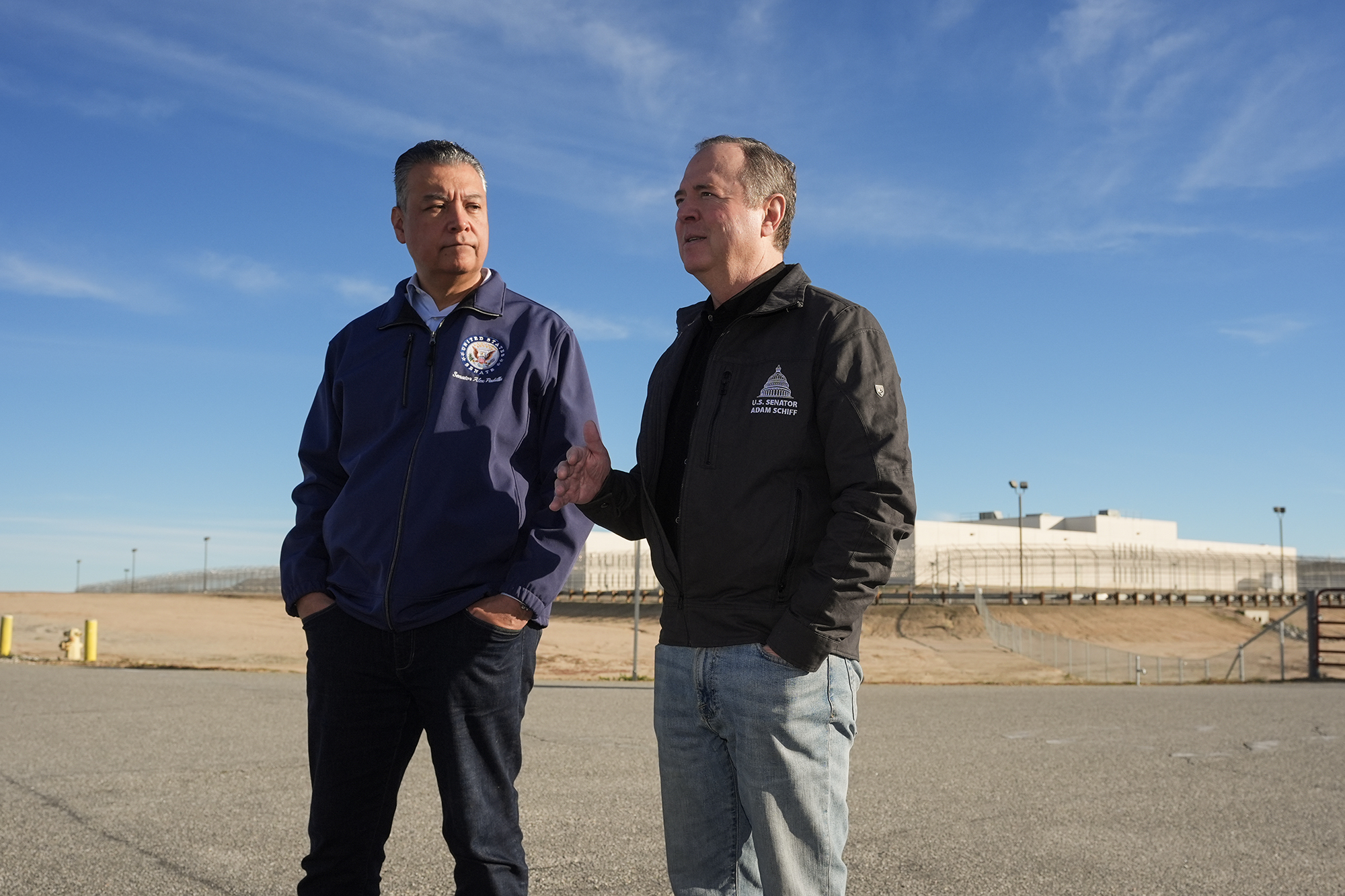
Democratic U.S. Senators Alex Padilla and Adam Schiff today conducted an oversight visit to the state’s newest and largest immigration detention center, located in California Cityabout 100 miles north of Los Angeles.
In remarks to reporters, both highlighted what they described as inadequate medical care at the site.
“The most common feedback we received was the inadequacy of the medical care they were receiving,” Schiff said. He described an encounter with a diabetic inmate who he said had not received treatment for his condition in two months. “It’s scary,” he said.
More than 1,400 people are currently being held at the California detention center run by private prison company CoreCivic in the middle of the Mojave Desert. It opened in late August under a contract with U.S. Immigration and Customs Enforcement with the capacity to hold 2,560 detainees.
CoreCivic previously operated the site as a state prison. The Newsom administration terminated the contract in 2024 as it closed several state prisons over the one in California a declining prison population.
“They’re going to have to do something very different if they want to meet the medical needs of the people here, let alone add another 1,000 people,” Padilla said.
Before entering the facility, Schiff and Padilla said they were conducting the inspection to “answer complaints and questions from constituents about the conditions in which detainees are held” and to “see firsthand what this facility is like.”
“On this anniversary of the second Trump administration, one year later, there are a few things that we already know his tenure was defined by: the brutality and over-aggressiveness of the mass deportation program,” Padilla said.
“It’s a necessary part of our oversight,” Schiff said. “We’ve all worked with constituents who have been detained here or are being detained here and described the conditions of the fall.”
By law, members of Congress have the authority to conduct surprise inspections of immigration detention centers. But Padilla’s spokesman said the senators had arranged the visit in advance.
In July, House Democrats sued the administration over a policy requiring seven days notice for visits, which they say violates federal law. In December 2025, federal judge Gia Cobb in Washington, D.C. temporarily blocked the seven-day notice policy while the case played out in court.
Following a deadly shooting incident involving an immigration officer in Minneapolis, Department of Homeland Security Secretary Kristy Noem issued a new memorandum on Jan. 8 reimposing the seven-day notice requirement. On January 19, Cobb does not block immediately this new, restated policy, concluding that the Jan. 8 directive is a “new agency action” that requires a different legal challenge than what was previously taken.
When President Donald Trump took office a year agoapproximately 40,000 people were held in immigration detention centers across the country. By early December, that number had increased by nearly 75 percent, with nearly 66,000 people being held in immigration detention in the United States and the system reportedly holding 70,000 people each day — the highest level in U.S. history, according to government data.
Last month, the California attorney general’s office warned of “dangerous conditions” at the California City facility. In a Letter of 19 Dec on Nov. 20, attorney Michael Newman wrote that the California Department of Justice “has serious concerns about the facility’s conditions and lack of adequate medical care” after inspecting the facility.
Attorney General Rob Bonta said the facility “opened prematurely and was not ready to handle the needs of the incoming population.”
Ryan Gustin, a spokesman for CoreCivic, previously told Calmatters that the site has robust on-site medical and mental health care, including 24/7 access to those services. He said these services adhere to “standards set by our government partners”.
“There is no delay in getting prescription drugs,” Gustin said.
in November those detained at the facility are on trialalleging that the facility was contaminated by leaking sewage and insect infestations and that detainees could not receive proper medical care for life-threatening conditions.
This article was originally published on CalMatters and is republished under Creative Commons Attribution-NonCommercial-No Derivatives license.

