Physical Address
304 North Cardinal St.
Dorchester Center, MA 02124
Physical Address
304 North Cardinal St.
Dorchester Center, MA 02124
from SponsorCalMatters
This story was originally published by CalMatters. Sign up for their newsletters.
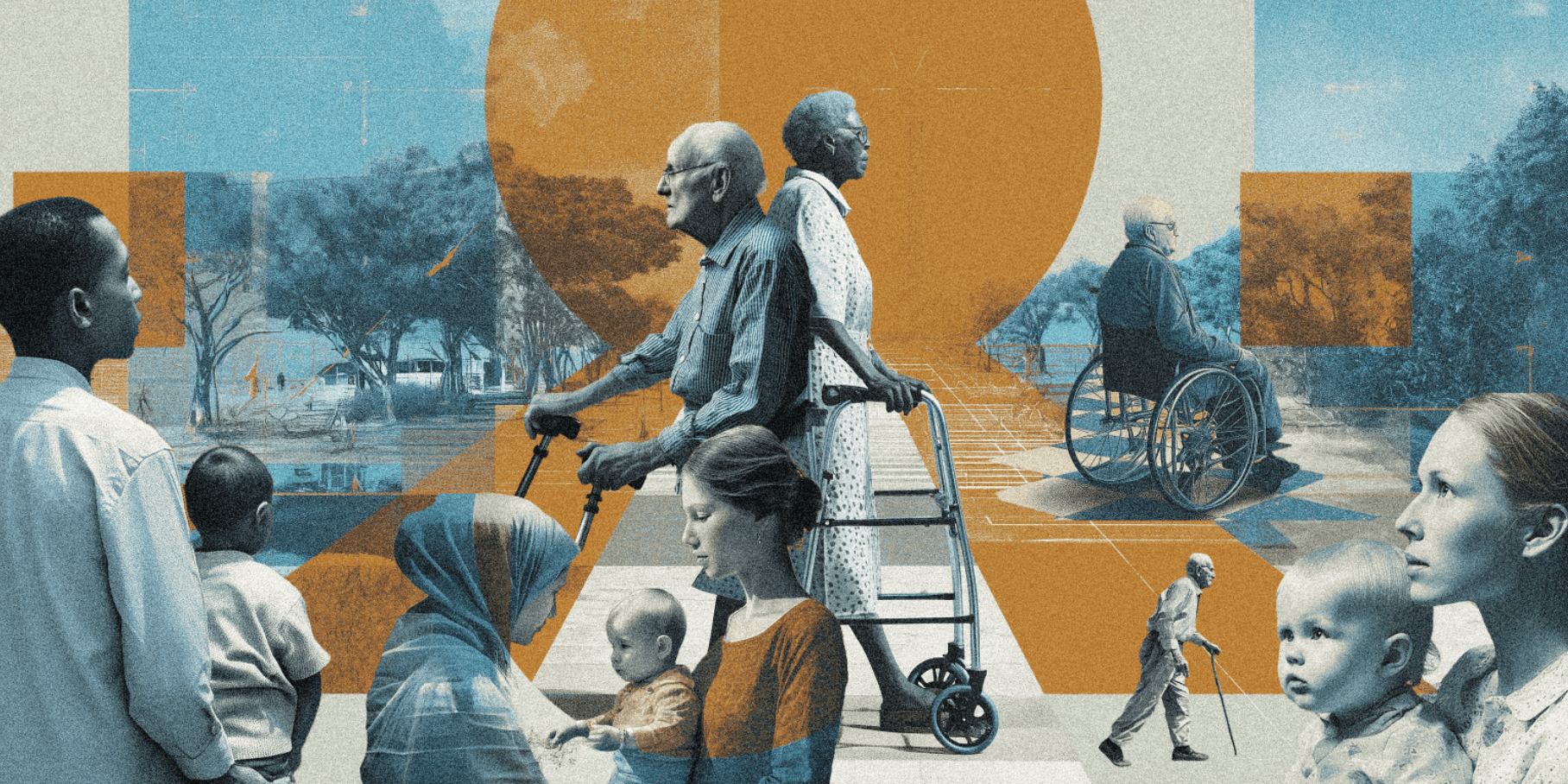
At some point in our lives, all human beings depend on the care of others – if not in the present, then certainly in our past, and for many in our future as well. Whether from a family member or legal guardian, medical professional or caregiver, the support of others is an essential prerequisite for personal well-being and shared prosperity.
When caregiving systems function well, young children have people to provide them with love, learning, and physical safety, working parents have affordable options to support their children’s growth, families don’t struggle with overwhelming medical debt, and seniors can age with dignity.
In a place like California, where we pride ourselves on our strong communities, why do some people still struggle to access basic services to care for themselves or their families? And what would it take to move from scarcity to abundance in the care economy so that people at every stage of life can get the support they need?
In the summer of 2024, the Possibility Lab invited public policy researchers from across California to share their ideas for addressing these questions. Here we present reports from three policy experts: Anna Powell (childcare), Leif Haase (health care) and Mireille Jacobson (elderly care).
Together, these three researchers describe how scarcity in the care economy is not inevitable, but is instead fundamentally shaped by policy. Achieving abundance, they argue, requires treating care as a public good, with sustained investment in the workforce and infrastructure that make it possible to provide high-quality care options to all residents. By aligning state-level investment, workforce development, and licensing reforms with local and regional planning, California can expand the supply and accessibility of essential care services for people of all ages.
Child care shortages in California are widespread. Currently, the state has enough capacity to care only one in four children who need care. According to Powell, this reflects a structural failure in the market. Caring for children is labor intensive and mandatory staffing ratios means that childcare centers must have sufficient funds to support an appropriately sized workforce. At the same time, their “customers”—i.e. parents of young children—are often at a point in their lives where they are especially low disposable income. Consequently, providers face high labor and operating costs, but cannot raise their rates without cutting prices for at least some families. This is putting constant pressure on the childcare sector, where parents cannot afford the options they have and carers cannot afford to stay in their a historically undercompensated profession.
Powell’s solution to this predicament is clear: We need sustained public investment to make child care programs economically viable and broadly scalable for every family that needs them. First, Powell argues that expanding supply requires investing in the people who provide care. As providers must find ways to contain costs so that care options are affordable, wages remain low and turnover high. Improvement compensation and working conditionsand reducing barriers to career advancement, she argues, is essential to retaining and growing a stable child care workforce. From a people-oriented perspectiveexpanding supply in this way not only increases available childcare places for families, but also improves economic security for caregivers themselves.
Second, Powell emphasizes the need to invest in physical capacity. Even if the child care workforce stabilizes and expands, available space in existing care facilities limits how many children can be served. Non-existent profit margins are again at fault, making it difficult for providers to maintain, improve or build facilities. Powell calls for a state investment in a dedicated facility fund, along with local funding tools and integrating child care into housing and land use planning, especially in high-needs communities.
At the same time, Powell cautioned that the investment must be coupled with broader systemic reforms, such as aligning subsidies with the real cost of care, developing funding models that provide more predictable revenue for providers, and using target universalism an approach that pursues shared, universal goals through needs-based policy strategies. For Powell, the goal is not expansion for its own sake, but a coordinated, system-wide, people-centered effort to maximize public benefit and choice for all families.
Like child care, health care as currently provided is not enough. Haase argues that when it comes to health care, California suffers from a gap between abundant medical spending and uneven health outcomes. According to the latest federal dataCalifornia spent $405 billion on personal health in 2020. As of 2010, per capita health care spending in California was grew faster on an average annual basis than both national health care spending and the state’s overall economic growth. Although big gains in coveragemany residents—especially those in rural areas, low-income communities, and communities of color— still struggling to access primary and mental healthcare.
To fill these gaps, Haase advocates a supply-side reform agenda focused on improving access where it is most limited. Central to this effort, Haase argues, is strengthening and diversifying the primary care workforce.
In his view, increasing residency slots, lowering licensure barriers for qualified clinicians, and expanding scope-of-practice flexibility would allow motivated providers to fill care gaps and ease patient competition for limited care appointments. Haase also emphasizes that the sustained expansion of telehealth can increase availability and reduce geographic disparities, particularly in rural communities that lack consistent access to care.
Importantly, Haase emphasizes, abundant health cannot be achieved through treatment alone. Improving access to housing, nutrition, education and even broadband access — key social determinants of health — is essential to achieving better outcomes, especially for lower-income Californians. Initiatives such as CalAIMHaase claims they demonstrate how integrating health and social services can maximize public benefit while reducing long-term costs, moving California beyond disease management to promoting healthier communities across the state.
Most seniors report that they hope to stay in their own homes as they grow olderbut this is not a reality for many as health needs and mobility options change. As California’s population ages, Jacobson argues that demand for elder care is outpacing the system’s ability to respond, exposing deep structural weaknesses in the way society provides long-term services and supports that seniors rely on. Highlighting the state’s leadership in this area through initiatives such as Aging Master Plan and CalAIMJacobson describes how the state can further incentivize and invest in the provision of senior care options so that access keeps pace with the state’s growing needs.
One of the most pressing gaps, Jacobson argues, is the persistence of a “missing environment” in the provision of aged care. Between limited home services and expensive institutional nursing care, low- and moderate-income seniors and their families often have several suitable options. By expanding services and supports for this middle tier, California could better match services to needs and increase capacity without leaving families with only the most expensive or restrictive options.
Labor force constraints, Jacobson points out, can further limit access to care as people age. Like what Haase is doing in the broader health care field, she highlights how restrictive scope of practice rules prevented trained home health aides from providing routine care (such as administering eye drops and medications), thereby reducing flexibility of options and increasing costs. In her view, streamlining licensure and expanding the scope of practice, combined with appropriate training and oversight, will enable more qualified providers to provide care for seniors who have limited resources.
Jacobson also calls for broader reform across the country, such as through Medi-Cal policies that align reimbursements with actual costs of care and reduce administrative fragmentation. In this way, she argues, senior care reforms can address underinvestment and miscoordination in service delivery while better serving the diverse needs of California’s aging population.
Ultimately, true abundance in California’s care economy will depend on our ability to design people-centered systems. By aligning investment and regulation to expand supply and expand access, California can reimagine care for generations. This will ensure that essential goods and services are not only reserved for those with the greatest resources, but instead are widely distributed and can serve as the foundation for economic opportunity, public health and broader well-being for all.
To learn more, visit UC Berkeley Possibility Lab’s Abundance Accelerator
This article was originally published on CalMatters and is republished under Creative Commons Attribution-NonCommercial-No Derivatives license.

