Physical Address
304 North Cardinal St.
Dorchester Center, MA 02124
Physical Address
304 North Cardinal St.
Dorchester Center, MA 02124
from Ryan SabalowCalMatters
This story was originally published by CalMatters. Sign up for their newsletters.
If you hadn’t met Doug LaMalfa, his campaign signs probably looked like an eye-rolling attempt at folksy charm that some slick politician who’s never had dirt under his fingernails could use to appeal to rural voters.
“He’s one of us!” they read, a cartoon cowboy hat perched on the “L” in LaMalfa’s name.
But as I’ve covered LaMalfa’s political career over the past two decades, often critically, I’ve come to appreciate those signs as an accurate description of LaMalfa, the longtime Republican member of Congress from a rural upstate state. He died in surgery after being rushed to a Butte County hospital Monday for a medical emergency.
LaMalfa was 65 years old.
Love or hate his hard-line, far-right Republican politics — President Donald Trump praised him on Tuesday for voting “me 100% of the time” — LaMalfa was as unique a political figure as you’ll find in Washington, D.C. or Sacramento. When he said he was “one of us” it wasn’t an act. LaMalfa, a fourth-generation Butte County rice farmer, was as committed and iconic to the people of his district as any politician I know.
You were much more likely to see LaMalfa downing a burger and a beer at a watering hole like The Tackle Box in Chico or at a gas station filling up one of his classic cars than you were to see him stand on the lectern in a suit.
From the rice fields of the Sacramento Valley to the Modoc County border with Oregon, the chances of seeing LaMalfa’s tall, husky figure as he mingled with his constituents at a Rotary Club luncheon, county fair, 4-H event, community festival or car show were high. He usually wore faded jeans and scuffed cowboy boots.
Former Republican gubernatorial candidate and former state senator Brian Dahle, a farmer from Lassen County, represented much of LaMalfa’s rural district in the Legislature. He said he was in awe of how involved LaMalfa was.
“He’s in Modoc. He’s in Plumas. He’s in Siskiyou, he’s in Chico. He’s everywhere and then he’s on a plane five hours back and forth (to Washington, D.C.),” Dahle said. “It was amazing. … I always said, ‘You can’t have a backyard barbecue, Doug LaMalfa, because you’d go to a backyard barbecue and he’d be there.’
I grew up in the LaMalfa area and most of my friends and family still live there. They bumped into LaMalfa all the time. I also covered something like 100 events involving LaMalfa as a fresh-out-of-college reporter, first at the Auburn Journal in Placer County and then for six years at the Record Searchlight in Reading in Shasta County. Later, during my seven years at The Sacramento Bee, my reporting on environmental issues often brought me home to the LaMalfa area.
My career as a reporter began when LaMalfa was beginning his career in state and federal politics. After graduating from Cal Poly San Luis Obispo and working on his family farm, LaMalfa was elected to the Legislature in 2002, first as a Republican assemblyman, then as a state senator.
LaMalfa was elected to Congress in 2012 and has held the seat ever since. He plans to try to retain it after California voters in November adopted proposal 50who redrawn LaMalfa’s district to skew Democratic. Former California Senator, President Pro Tem Mike McGuire has announced he is running for LaMalfa’s seat. His death has shaken up the political landscape significantly, leaving uncertainty over who will be the Republican challenger in the expected a snap election to replace him.
I’ve covered LaMalfa over the years, sometimes unflatteringly. In Searchlight, I wrote about the federal subsidies his family farm received even as Republicans like himself at the time were debating cuts to “welfare” programs for the poor. I wrote about how much money he was taking from the taxpayers for mileage as he drove around his vast area in one of his gas-guzzling sports cars.
At the bee, I wrote about how LaMalfa, who as a farmer was familiar with heavy equipment, got on a bulldozer in Sisikiyou County and started mowing down illegal pot with the local sheriff’s department.
“I love the smell of diesel power in the afternoon. It smells like victory,” LaMalfa said in a video he posted on social media, riffing on a line from the Vietnam War epic “Apocalypse Now,” before breaking into a smile.
It was a remarkably tone-deaf thing to say, since these pots were owned by Asian immigrants, some of them Hmong, whose relatives had fought in the Vietnam War. They accused local authorities of racial harassment. The movie came right after the military hit an innocent Vietnamese village with napalm.
I pouted LaMalfa and his uncompromising style, especially on environmental issues, in a a series of essays I wrote for The Bee about the intractable wildlife problems in northeastern California, whose habitats are dear to me.
I called him on his cell phone, five years before the day he died, as a raging mob of Trump supporters attacked the US Capitol. He didn’t pick up. LaMalfa would later join the group of Republicans who voted against confirming Joe Biden for president.

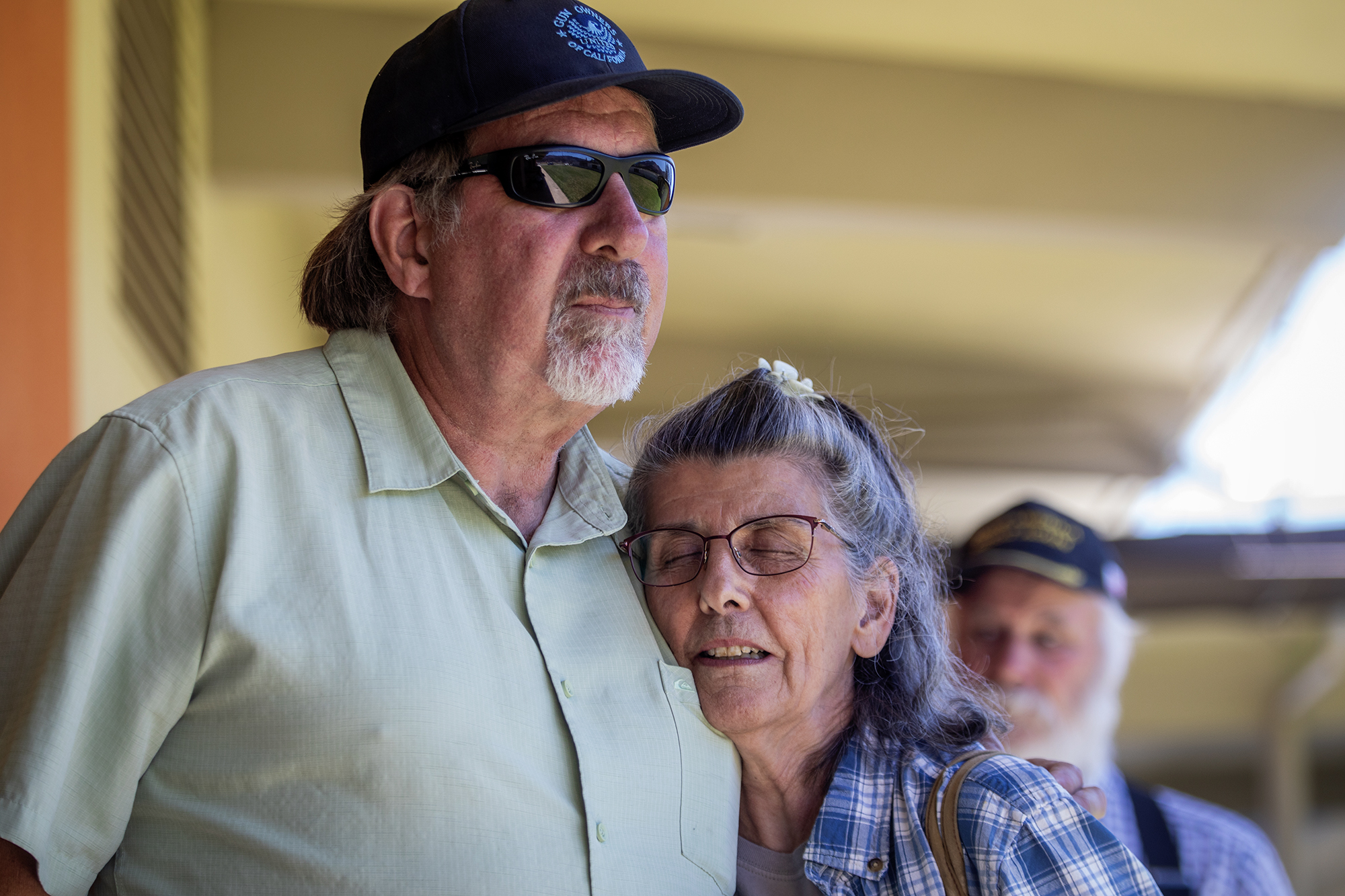
All that to say, I’m sure many liberal members of LaMalfa’s district are shedding no tears over his loss, but I choked up Tuesday morning when I read the news that he had passed away.
I’ve always liked LaMalfa personally, though I don’t think he liked me much thanks to some of these stories. I guess I just appreciated how Doug LaMalfa never stopped being Doug LaMalfa, a raw farmer who was kind and warm in person but also spoke his mind no matter who was in the room.
I remember seeing it once while covering the Kool April Nights car show in Reading. I’m sure he had some face-to-face time with the people he hoped would vote for him in the next election, but I could tell he wasn’t really there for that. He was checking out all the shiny old cars because he was a classic car buff and that was his jam. One of LaMalfa’s former employees said he used to ask potential employees, “What’s your favorite car?”
I’ll also never forget LaMalfa’s visit to an event in Reading where my wife received an award for her work in a program that helps underprivileged children. There were only a few dozen people there, no media cameras, and his office didn’t send out a press release saying he would be there. LaMalfa went because it was just the nice thing to do, quietly supporting those who supported Reading’s troubled youth.
And even though he was a bit frosty with me, he always asked how my wife and her father were doing during interviews. He would regularly run into my father-in-law in Chico, where he volunteers for various service organizations.
Republican state Sen. Tony Strickland was LaMalfa’s roommate while the two served in the legislature. He said “Daddy Doug” always made time, no matter how busy he was, to ask him about his daughter, now in college, who he held as a baby.
“He’s really a deeply caring human being,” Strickland said.
In this era of hyper-partisanship, I respected how, instead of running to cable news to offer partisan criticism, LaMalfa would wait to speak with then-President Biden after his State of the Union addresses. He politely pressed Biden to personally pay more attention to fire prevention and other issues important to his constituents.
I also respected how passionate LaMalfa was about the Oroville Dam spillway disaster in 2017 and the campfire that burned the town of Paradise the following year. At one point, LaMalfa joined a media conference call organized by state officials and began criticizing the people in charge. He was mad.
These were his family and friends living under the broken spillway and whose homes had burned in Paradise.
“You may not agree with his particular point of view or his particular position on an issue,” Butte County Sheriff Corey Honea, who worked closely with LaMalfa during the dam ordeal, the camp fire and several other major disasters, told me. “However, I believe with all my heart that he was passionate about representing the interests of the Upstate residents he served and did so in accordance with his values and what he believed was best for the community.”
Erin Mellon feels the same way, even though she often drew fierce criticism from LaMalfa when she was a spokeswoman for the California Department of Water Resources, which manages Oroville Dam.
Although she’s a Democrat, Mellon said that even after LaMalfa listened to her, she appreciated how gracious he and his team treated her afterward. At one point, LaMalfa even took her on a personal tour of the spillway in his red Thunderbird convertible.
“On one date, he can blow you up and rip you apart, then the next second take you on a tour of Oroville Dam in his precious red convertible sports car,” she said, choking up at the memory. “For him to take that time to respect you as a person is unique. … He was very authentic. He was really himself and he was really, he was just a great representative of this part of the state. He really fought, I think, for his constituents and he wasn’t terribly selfish about it.”
LaMalfa is survived by his wife, Jill, four children, one grandson, two sisters and numerous cousins, according to a statement from his office.
This article was originally published on CalMatters and is republished under Creative Commons Attribution-NonCommercial-No Derivatives license.

