Physical Address
304 North Cardinal St.
Dorchester Center, MA 02124
Physical Address
304 North Cardinal St.
Dorchester Center, MA 02124
from CalMatters StaffCalMatters

This story was originally published by CalMatters. Sign up for their newsletters.
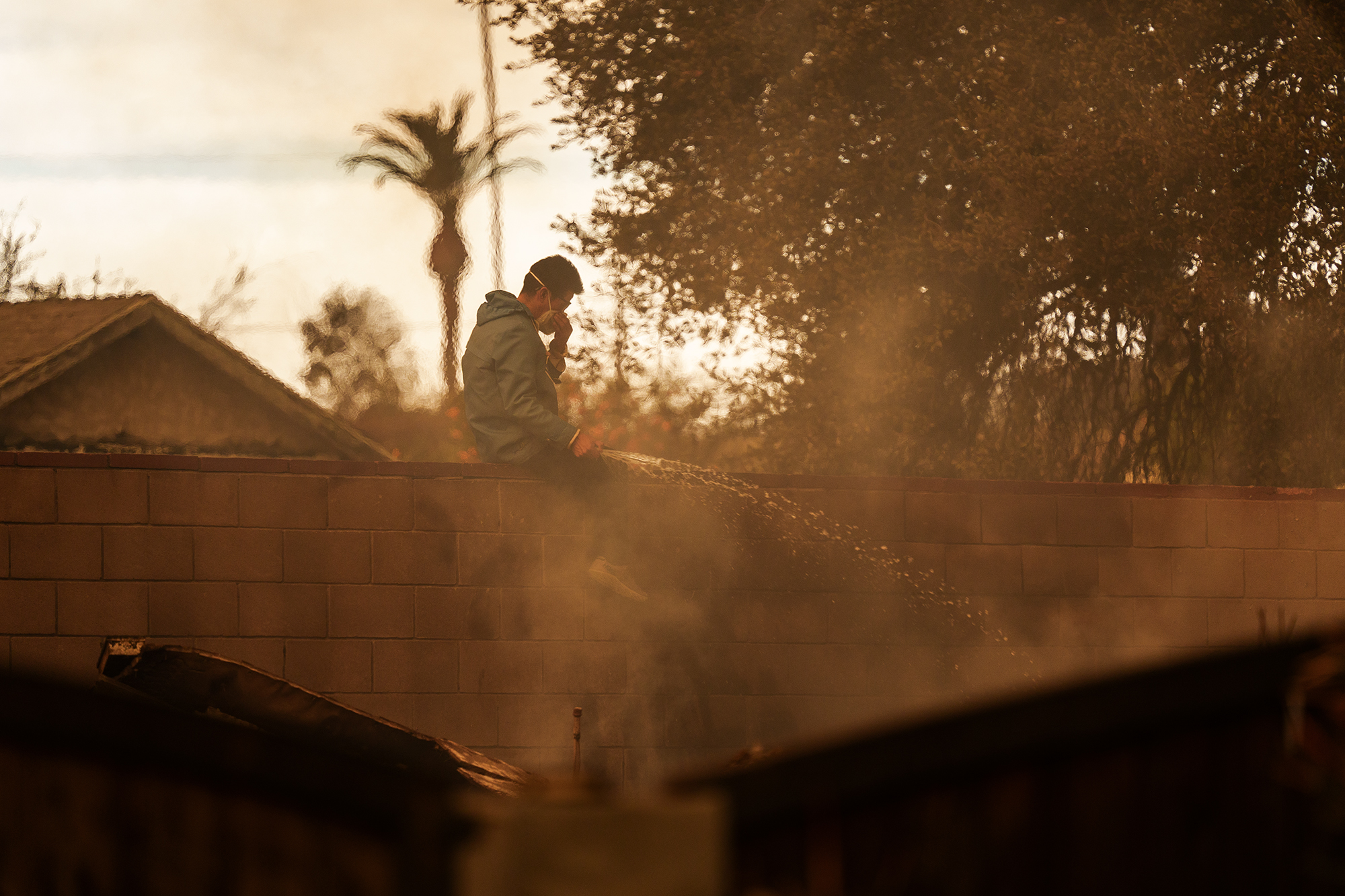
As the Palisades and Eaton fires burned last January and for weeks afterward, clouds of ash blanketed the city. This ash contained microscopic particles of heavy metals and synthetic chemicals from the homes that were consumed by the megafires. The dangers in Los Angeles are not unique: they have become part of the legacy of wildfires at wildland-urban interfaces throughout California.
Modern homes are full of synthetic chemicals found in everything from paints and finishes, to electronics and upholstered furniture, to cookware. After Camp Fire, California Air Resources Board analysis in 2021 tracked heavy metals like arsenic and lead traveling in smoke from Chico all the way to San Jose. Last year, both in the fire-ravaged neighborhoods of Los Angeles County and down under, people wondered exactly what was in their gardens, yards, sandboxes and playgrounds — and raised questions about how risky it is to interact with the environment after a major wildfire.
Yet FEMA, the California Environmental Protection Agency and Los Angeles County chose not to conduct soil testing. Instead, FEMA ordered that the top few inches of soil be removed from the burned properties. Local governments and NGOs have stepped in to provide testing and education, but no clear standard exists for soil testing or safe home cleaning.
Here are answers to questions frequently asked by fire survivors and those who have lived through its effects.
No federal or California mandate establishes one. FEMA had a policy of collecting soil samples to test for hazardous chemicals, but in 2020 reversed its routine. The agency made an exception in Hawaii in 2023, where basic data about what’s in the soil was missing.
CAP.LA will come to a property to do testing when a homeowner fills out this form and they say they give results after about a month.
Residents can mail or drop off soil samples they collect for the USC Clean Project after registering online for an ID number.
Separately, the Los Angeles County Department of Public Health offers a fallout soil testing program also, with a priority for people in the footprints of the Pacific Palisades and Altadena fires.
Without federally sponsored testing, local governments, nonprofits, and academic groups stepped in: Los Angeles County Public Health allocated up to $3 million from their Lead Paint Hazard Reduction Program to fund free soil lead testing for residents living in and downwind of the Eaton and Palisades Fires’ burning areas. Funded by the R&S Kayne Foundation CAP.LA – The Los Angeles Community Action Project – which connects people with free soil and water testing and offers targeted advice to individual homeowners. Another soil testing project, USC Clean, is funded by a significant grant from FireAid, a nonprofit organization, along with support from LA Care, a public, locally managed Medi-Cal care plan.
Many substances are released when houses and cars burn, including plastics, chemicals and metals. Metals can fall out of the ash and settle on soil, grass and trees – hanging around the local environment after the structures burn. Lead can become airborne during a fire as toxic lead fumes or settle in ash and soil. This is alarming because there is no safe level of lead exposure. Exposure to lead and other heavy metals can pose serious health risks, especially to children, pregnant women, the elderly, and people with pre-existing health conditions. When people touch contaminated soil or surfaces, hand-to-mouth contact is dangerous.
When scientists did detailed surveys of soils after the devastating 2021 Marshall Fire in Colorado, they found higher levels of metals such as lead, chromium, copper and zinc in burned areas than in unburned areas — but overall levels were below the threshold of danger to human health.
But the risk is different for every property – so it’s important to get your soil tested. In Los Angeles County, CAP.LA helped as well Los Angeles Department of Public Health – which prioritizes properties located in the Eaton and Palisades burn zones for free soil testing – as well as USC Clean Project. CAP.LA’s map shows summary results of self-sampling for soil lead testing.
In general, the risk depends on how your soil and outdoor spaces are used. Young children who often play in the dirt are at greater risk than adults. People who often eat from their gardens are also at slightly higher risk – although food from gardens is generally safe (with precautions), even after fires.
Experts advise to consider the frequency of your exposure to build a profile of your risk – with more concern whether it is a playground or a garden where you walk several times a day, compared to a burnt building that will eventually be covered with a new foundation of a future house.
Many parts of California have long had a lead problem: lead paint and leaded gasoline have left their mark on the landscape. Even before the fires, a study of 600 soil samples from urban areas in Los Angeles County found an average 180 ppm lead in soils.
The California Department of Toxic Substances Control uses a level of 80 parts per million in residential soil as a cutoff screening level above which concns May they are not safe for small children, fetuses and pregnant people. That’s more protective than the EPA’s safety threshold, which was 400 parts per million before the Biden administration lowered to 200 parts per million in 2024.
If soils have more than this amount, children should not play in them and people should take care to thoroughly clean up any root vegetables growing there. Even if there’s a lot of lead in the soil, it doesn’t mean there’s a lot of lead in your body—if the lead winds up in you, it means you’re ingesting dust or food or interacting a lot with the soil.
Simple solutions can help the situation. For soil you can’t move, it’s easiest to just cover the bare dirt with something else—mulch, wood chips, or even grass. Using raised beds or containers of clean soil for gardening creates a barrier between the contaminated soil and the clean soil in which the plants can grow. Adding compost to soil can also increase microbial and fungal populations, which help break down some chemicals in the soil. Soaking vegetables in a 10% vinegar solution can absorb any remaining soil particles.
Take your shoes off when you enter your home and make sure you wash your pet’s hands and paws after they touch bare dirt. Wet mopping and cleaning the areas around the front door can also go a long way in preventing lead particles.
This article was originally published on CalMatters and is republished under Creative Commons Attribution-NonCommercial-No Derivatives license.

