Physical Address
304 North Cardinal St.
Dorchester Center, MA 02124
Physical Address
304 North Cardinal St.
Dorchester Center, MA 02124
from Deborah BrennanCalMatters

This story was originally published by CalMatters. Sign up for their newsletters.
At YMCA Camp Surf in Imperial Beach last week, a group of middle school students spent the morning skateboarding, climbing a climbing tower and practicing archery.
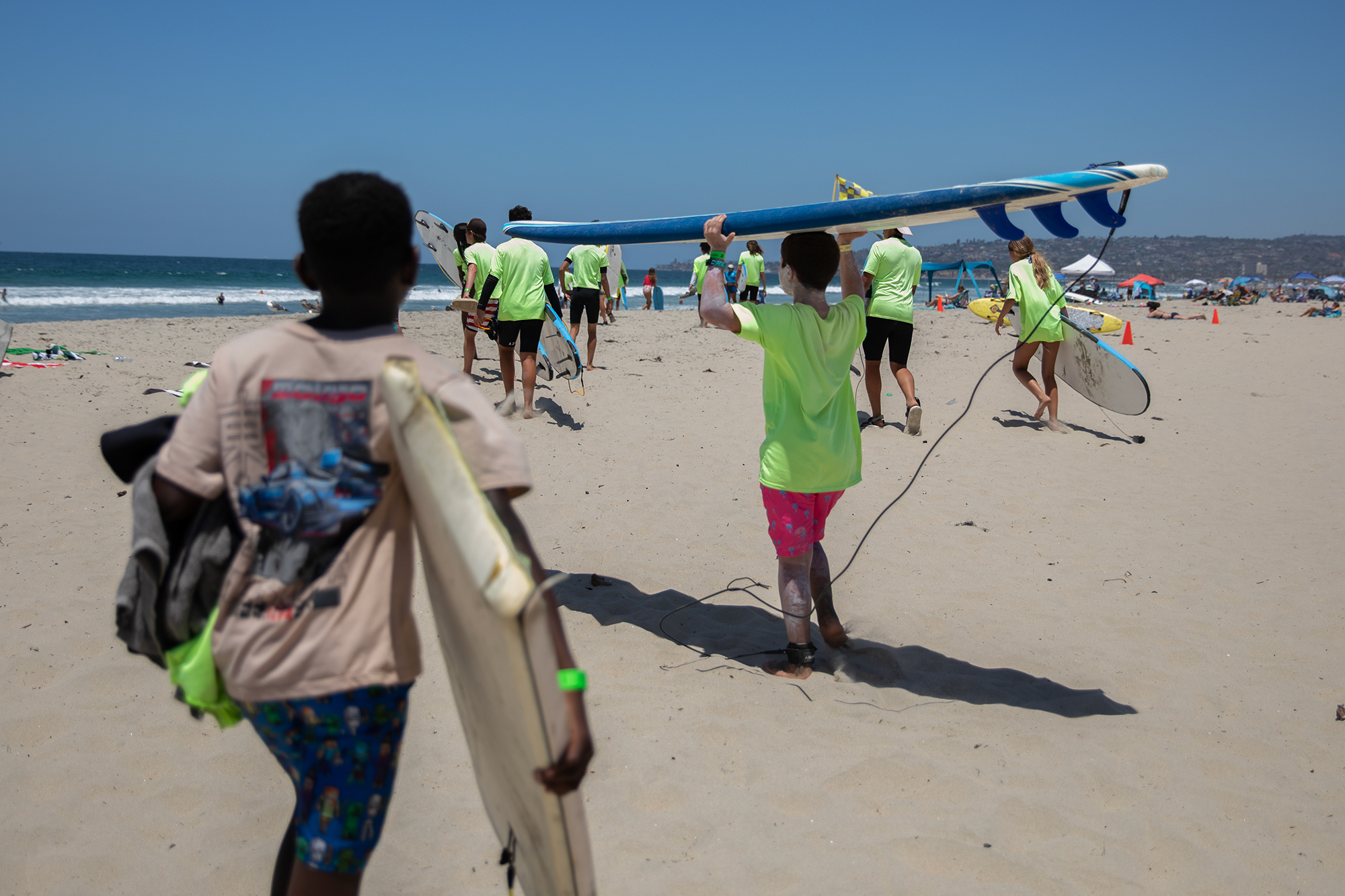
Then, at noon, campers boarded a bus for the 40-minute drive up the coast to Mission Beach, where they jumped into the waves for the camp’s namesake activity: surfing.
Founded in 1969, Camp Surf has catered to generations of South San Diego children, introducing them to water sports and outdoor activities. With its coastal location and surf shack motif, it’s the picture of Southern California beach life.
But for the past few years, access to the shore has been limited by constant sewage pollution from Tijuana, forcing the camp to find a solution.
“Instead of being able to go into the ocean right there at Camp Surf, now we have to run buses to other beaches,” said Jamie Cosson, executive director of overnight camps for the San Diego YMCA. “And people’s relationship with the camp was hurt by that.”
Cross-border sewage pollution has plagued Imperial Beach, Coronado and other parts of South San Diego for decades and has worsened in recent years. As Tijuana’s population grew and treatment plants on both sides of the border failed, hundreds of millions of gallons of raw sewage poured into the ocean. This has disgusted swimmers and surfers and led to near-continuous beach restrictions for the past three years.
Imperial Beach residents describe waking up with headaches, asthma and rashes after exposure to water or airborne pollutants from the Tijuana River. Schools call “rainy day schedules” when pollution levels spike. Struggling to breathe, sleep and swim, many residents of the mostly working-class, majority Hispanic community feel their environmental concerns are being ignored.

Pollution also eroded traditions and inhibited outdoor activities, leaving a generation of beachgoers wary of the water.
“Without having that access to a free, fun activity, the community isn’t as connected as it was when I was a kid,” said Taylor Case, 18, a recent graduate of Mar Vista High School in Imperial Beach.
At the entrance to Camp Surf is an amphitheater where children and staff gather for songs, skits and campfires. Behind it, villas painted in sage, gray and tan are covered with palm thatch and fish netting. In the wood-beamed dining room, a wall of windows opens onto the empty beach.
In the past, the shoreline would have been full of campers surfing, boogie boarding and building sandcastles, said program director Peyton Schoonmaker. On the weekends, church groups, Girl Scouts and families set up camp.
“Before, you would see almost a tent city with 300 people camping on the beach,” he said. “But now a lot of our business is gone.”
Last week, campers followed their advisor for a brisk walk along the shore: “They’re going to do a walk on the beach and then some trash.”
This summer, the facility will serve about 700 overnight campers in grades three through twelve. That’s down from 1,200 in the past, Cosson said. About 400 day campers between grades one and seven will also be in attendance.
With a full-day schedule of outdoor activities, it’s a break from screens and social media. No electronics allowed; kids check their cell phones at the gate.
“I think camps fill this incredibly important niche in society right now, being unplugged, in nature, building real relationships away from electronics,” Cosson said.
During part of the day, campers play soccer, do arts and crafts, practice climbing a 35-foot tower, ride the ramps at the skate park, and line up for target practice at the archery range.
As two girls argued over whether an arrow hit the eye or the yellow ring around it last week, one boy couldn’t resist teasing them: “Girls, that’s a bad shot.”
“In their first round, they might not hit the target at all,” Schoonmaker said. “By the last round, they hit all five arrows on the target, so within just an hour they see this growth.”
That surge of confidence and independence is the heart of the camp experience, he said. “It’s all about making friends, trying new things, feeling like you belong.”


It’s also about surfing. As of 2023, the camp’s beaches are closed for most of the summer, so campers must travel to surf and swim.
If water conditions permit, they go to neighboring Coronado, a 15-minute bus ride north. This town has also recently experienced a beach water shutdown, so campers are traveling further north.
At noon last week, they boarded a bus, ate turkey sandwiches on the South Mission Beach lawn, and then swam out en masse. Some kids fell off their boards as soon as they jumped out, while others quickly got used to it and even tried tricks. One boy jumped off and flipped about 180 degrees on his board as he surfed toward shore.
“We made it work,” Cosson said. “We still have lots and lots of kids out there, it’s just a challenge for us.”
The effects of beach closures extend beyond this program, creating gaps in outdoor education, physical activity, recreation and water safety for children in South San Diego.
“We have kids growing up in a community where they can’t get in the water, and that’s really tragic because that’s where they learn water safety and how to swim,” Cosson said.
Like Camp Surf, Imperial Beach’s junior lifeguard program is in preparation mode after the pandemic.
The program was suspended during the shutdown due to COVID-19, then reopened for another health hazard: sewage contamination.
“I don’t think we’ve had a day that the beach has been open,” said Jason Lindquist, Imperial Beach’s chief lifeguard. “We’re moving away. We’re busing everyone out of here. We can’t use the beach for anything. It’s been a challenge.”
They adapted by hiring a school bus to drive junior lifeguards up the coast. At first, they bused children to neighboring Silver Strands Beach, just a few minutes north. But when that beach faced frequent water quality closures, they had to shift gears.

Imperial Beach lifeguards schedule the three-week program with visits to nearly every other beach town in San Diego County, in coordination with neighboring lifeguards.
“All the other rescue agencies said you can come here anytime,” Lindquist said. “We’ve been all over the county. Our junior lifeguards probably get the most well-rounded view of the coastline.”
Some kids get discouraged by long bus rides, he said, but many participants and their parents like the variety. Demand for the program typically exceeds capacity, and bus and staffing limitations mean they cannot accommodate as many junior lifeguards as they would like.
This makes it a challenge to prepare the youth of Imperial Beach to enjoy the water safely and to train some of them to become professional lifeguards themselves.
“Imperial Beach’s identity has always been rooted in our shoreline, and our Imperial Beach Young Lifeguard Program plays a vital role in preparing local youth to become capable ocean lifeguards, good citizens and community leaders,” Imperial Beach Mayor Mitch McKay said in a statement to CalMatters. “The importance of the program cannot be overstated, many current and past city lifeguards have actually graduated through our junior lifeguard ranks and become highly capable, loyal full-time city employees.”
Families and community leaders in Imperial Beach have given much thought to what it means to live in a place where much of the outdoors is off limits from pollution.
The city of 25,000 is 53 percent Hispanic and the median household income is $86,000, about $20,000 less than the San Diego County average and at least $50,000 less than neighboring coastal cities. It is one of the few places in the region where working-class families can afford to live near the beach. But they can’t use it.
“I always wonder what message this sends to youth and families, to close the nearest beach and make the air hard to breathe,” said Tiffany Curry, public policy coordinator for the San Diego Outdoor Outreach program.
The organization offers surf lessons and outdoor education for South San Diego kids. Just not in their hometown. Like Camp Surf, they shuttle kids to other beaches, sometimes as far north as Oceanside, 50 miles away.
“Whenever we serve youth affected by pollution, we have to get them out of their communities,” Curry said.

Sergio Gonzalez, 16, recently went on a trip to SeaWorld with the organization for his marine biology class at Mar Vista High. Another time his class visits the beach to test the water quality at Imperial Beach.
“When I walk on the beach, I see dead animals and birds,” Gonzalez said. “It really worries me. I wish I could do something about it.”
San Diego County tests beach water quality daily and in 2022 introduced DNA-based testing that provides results in hours, not days. It issues warnings or advisories when levels of bacteria or other pollutants exceed state standards, and imposes closures when a known sewage or chemical spill contaminates the water. As of 2023, much of Imperial Beach’s shoreline is almost permanently closed or declared for unhealthy water quality.
Some improvements are being worked on. The United States and Mexico have set aside a total of $800 million to repair damaged treatment plants, and both sides upgraded their facilities last year. Local officials are seeking $25 million to fix a spot called the Saturn Boulevard Hot Spot, which is the source of much of the air pollution. This year, Imperial Beach will build a splash pad next to its pier to offer near-shore water activities, McKay said.
For some young people in the community, these solutions seem far away. Taylor Case had heard their mother and other Imperial Beach locals describe summer nights around bonfires on the beach and hoped to experience it before heading off to college in the fall.
“They talk about how much fun they had with their friends and families and how close-knit the community was, and I just don’t see that now,” said Case, who hasn’t gone to the ocean near his home since 2017. “And I know for sure it’s because of the pollution because we don’t have that beach anymore.”
This article was originally published on CalMatters and is republished under Creative Commons Attribution-NonCommercial-No Derivatives license.