Physical Address
304 North Cardinal St.
Dorchester Center, MA 02124
Physical Address
304 North Cardinal St.
Dorchester Center, MA 02124
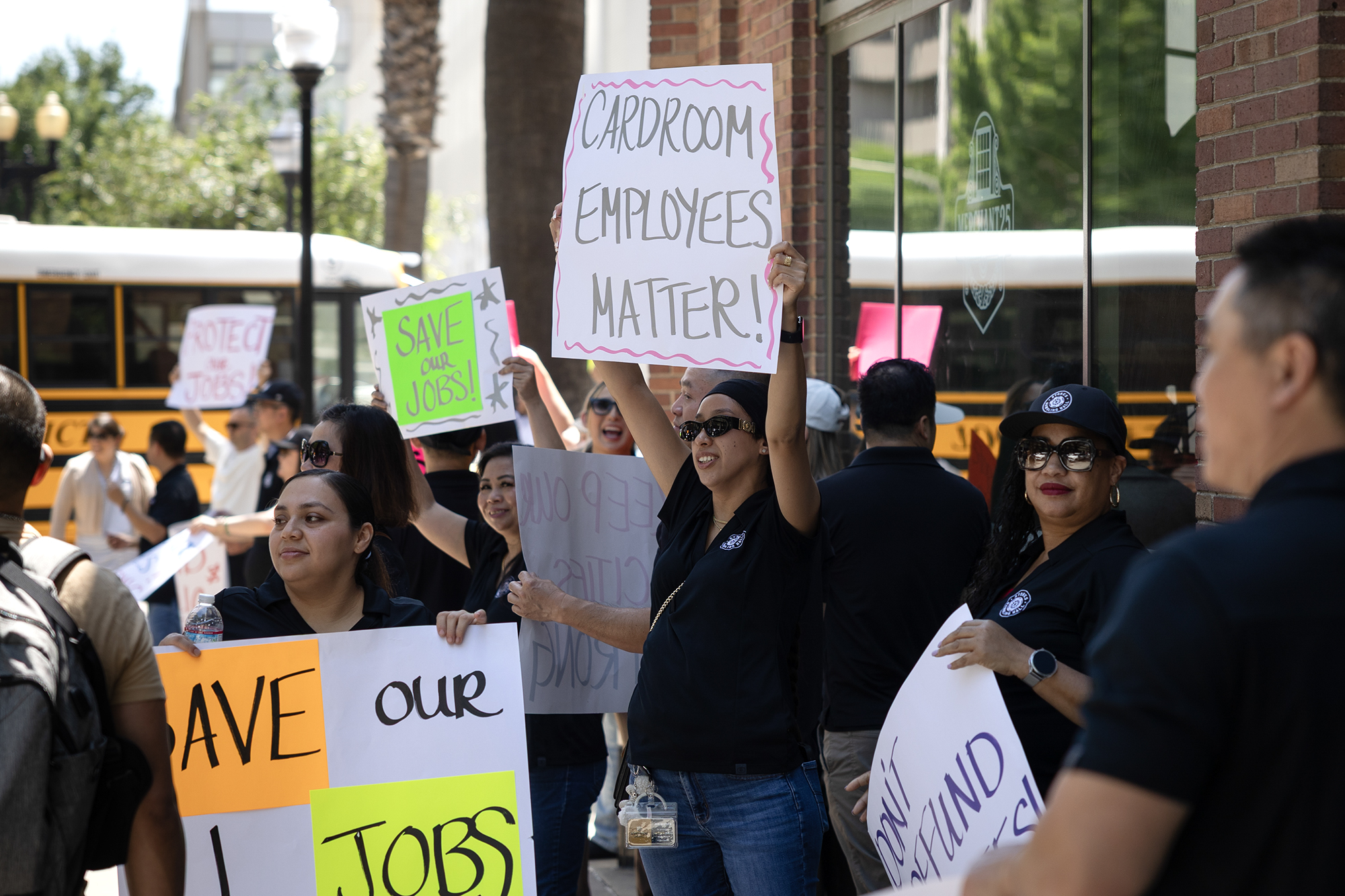
from Ryan SabalowCalMatters

This story was originally published by CalMatters. Sign up for their newsletters.
In the latest battle over the future of gambling in California, private card rooms scored a temporary victory over tribal casinos when a judge blocked state regulators from banning blackjack in arcades.
Attorney General Rob Bonta’s Bureau of Gambling Control regulations threaten to eliminate table gaming taxes that many California local governments rely on.
But whether the state’s 80 or so private poker rooms can maintain their lucrative business model — and continue to lure gamblers away from tribal casinos — was hardly decided by San Francisco Superior Court Judge Richard Darwin’s preliminary injunction last month.
At least one former lawmaker says that’s cynically good news for politicians in the state.
Democrats and Republicans have accepted millions of dollars in campaign donations from rival gaming factions as tribes have tried to use the state’s political system to put card rooms out of the blackjack business.
“It keeps the fight going; it keeps the two very powerful interests interested in what’s going on in the Legislature, and therefore keeps the campaign contributions going,” said Mike Gatto, a former Democratic lawmaker from Los Angeles.
Twenty-seven casino-owning tribes in the state have donated at least $15.8 million to current members of the state legislature, according to CalMatters Digital Democracy Database.
Twenty-six of the card rooms and related companies have given them at least $2.8 million, according to Digital Democracy. Card rooms are private businesses that host poker and other card games.
Bonta also benefits from the dispute. He is up for re-election this year. Cardrooms have donated at least $244,000 to Bonta since 2012, according to Digital Democracy, compared to $531,000 from tribes.
The uneven donations from the tribes did not affect the attorney general’s decision to proceed with the regulations, which were set to go into effect this week, said Bonta’s campaign spokesman, Jonathan Underland. The attorney general’s office referred an interview request regarding Underland’s campaign donations.
Bonta stopped accepting campaign donations from gambling factions before it began implementing the regulations, Underland said.
“Contributions have never influenced the attorney general’s decision-making process,” Underland said in a text message.
Underland cited ballot initiatives that give tribes the right to negotiate agreements with the state to conduct Las Vegas-style casino gaming. Since then, the tribes have fiercely defended their exclusive gambling rights. They claim the games are a lifeline that has helped their historically disenfranchised communities out of poverty.
“California voters made up their mind about tribal gaming in 1998 and confirmed it two years later,” Underland said. “The constitution is a hard line and Rob Bonta is committed to enforcing it.”
The tribes claim that the card rooms recklessly violated rules prohibiting anyone but the tribes from offering “house bank” table games, including blackjack, the most lucrative.
Card clubs circumvent the ban by contracting with third parties who act as “houses” or “banks”.
These third-party employees usually sit at the tables next to the dealers in the card room. The third-party operator plays no role in the game except to collect players’ bets and pay out winnings. Dealers should periodically offer players the opportunity to act as a bank. Almost every customer refuses. Card clubs collect a fee from each game.
Bonta agreed with the tribes that the card rooms were violating the rules and issued regulations that his attorney general predecessors, Kamala Harris and Xavier Becerra, began to enforce but never completed.
Darwin’s preliminary injunction found that Bonta’s office may have overstepped its authority by banning the most popular board games from the file cabinets. The ruling is valid for 45 days. The General Prosecutor’s Office will appeal to the court on June 30.
A spokesman for the California Indian Gaming Association did not return a request for an interview.
Kyle Kirkland, a Fresno arcade owner and president of the California Gaming Association, applauded the temporary decision and believes his industry will prevail.
“We are a legitimate industry, we have decades of legitimate work,” Kirkland said. “We operate legally; we provide incredible support to our employees and our host communities.”
If the card houses win, it would be the tribes’ second legal defeat in less than a year.
In October, a Sacramento judge filed a lawsuit the tribes went against the file cabinets. It was a test of a 2024 law Gov. Gavin Newsom signed which gives the tribes power to judge their rivals. Until now, tribes have not been able to sue private record companies for unfair business practices. Tribes are sovereign governments, so they lacked legal standing in state courts.
Senate Bill 549 gave the tribes one opportunity to resolve their dispute in Sacramento County Superior Court. The judge found that the federal law supersedes what Newsom signed.
The stakes are high outside of casinos, as some cities get nearly half their budgets from gambling hall taxes, so a tribal victory would threaten money for police, fire and other local services.
San Jose officials say that city alone receives $30 million each year from gambling halls, enough to fund 150 police officers or 133 firefighters.
The fight over SB 549 was one of the costliest political battles of the two-year legislative session that ends in 2024, and gambling organizations poured money into legislative campaigns.
A bipartisan coalition of lawmakers, many with large tribal casinos in their districts, pushed for the gambling measure, while a smaller group of lawmakers with card rooms in their districts opposed it.
According to Digital Democracy Database.
Tribes pushed for the bill after spending millions on a failed 2022 sports betting initiative that would have similarly allowed tribes to sue card rooms.
Faced with what they saw as an existential threat, the cardrooms responded to the introduction of the bill with a massive lobbying strike. In 2023, Hawaiian Gardens Casino spent $9.1 million on lobbying, the second most any company reported to state regulators. Only international oil giant Chevron Corp. has spent more this year.
After Newsom signed the law, the cardroom industry spent more than $3 million in retaliation against four lawmakers who played a key role in the bill’s passage.
Three of the slated candidates lost re-election, including the bill’s author, Democratic Sen. Josh Newman of Fullerton.
Digital Democracy engineer Alexis Ramirez contributed to this story.
This article was originally published on CalMatters and is republished under Creative Commons Attribution-NonCommercial-No Derivatives license.