Physical Address
304 North Cardinal St.
Dorchester Center, MA 02124
Physical Address
304 North Cardinal St.
Dorchester Center, MA 02124
from Harry Johnson and Wendy FryCalMatters

This story was originally published by CalMatters. Sign up for their newsletters.
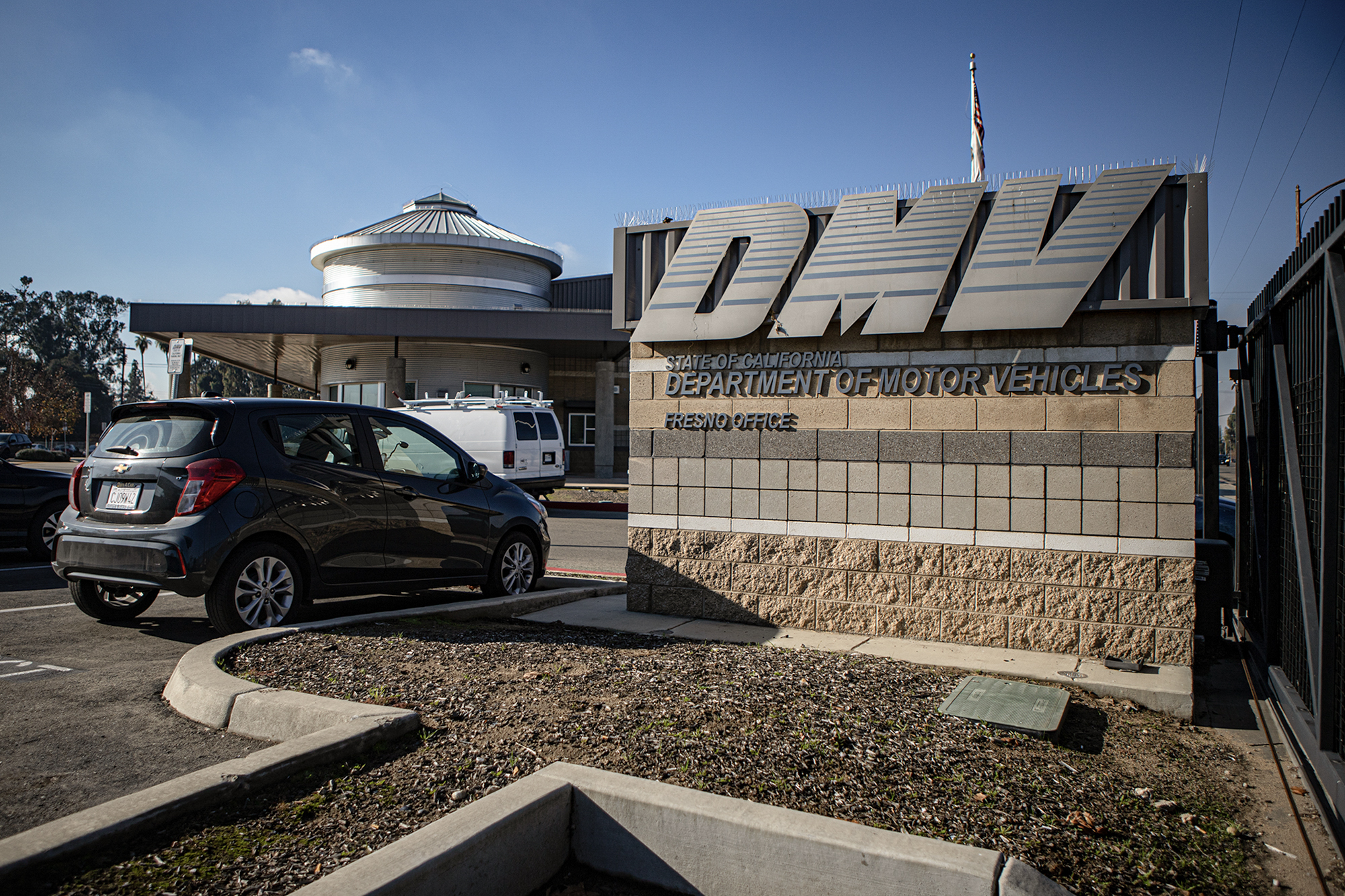
California is preparing to share with an outside organization detailed information about driver’s license holders, including immigrants who do not have legal permission to live in the US
That breaks a promise the state made a decade ago when it began issuing licenses to unauthorized immigrants, advocates say, and means more than 1 million people could face a higher risk of deportation.
But if state officials don’t turn over the data, the Department of Homeland Security could refuse to accept California licenses and IDs at airports, advocates believe after a briefing with the California Department of Motor Vehicles and Gov. Gavin Newsom’s office earlier this month. State officials have confirmed they plan to share the data to comply with the Real Identification Act of 2005, which sets requirements for accepting government identification at federal facilities such as airports.
Representatives of four advocacy groups who participated in the briefing told CalMatters that the information shared would show whether a person has a Social Security number, meaning it could be used to identify people in the country without authorization.
The state plans to provide the information to the American Association of Motor Vehicle Administrators, a nonprofit organization whose governing board is made up of DMV officials from around the country.
The information provided to the association will feed into the group’s state verification system and its platform, known as SPEXS, which allows the DMV and the contractors who work with them to verify if someone has more than one license issued in their name. Sharing this data allows agencies that issue driver’s licenses to verify that an individual does not have duplicate licenses in multiple states.
In the future, a database of identifiers such as that maintained by the association may be used for maintenance mobile licenses that people can use on their iPhones or online age verification to access adult content or chatbots.
But advocates fear that federal immigration officials will try to access the data en masse and use the fact that a person does not have a Social Security number as a signal that they are subject to deportation.
The state received assurances from association that safeguards will be added to prevent bulk searches of unauthorized immigrant license holders in the database and to prevent access by the Border Patrol and Immigration and Customs Enforcement, according to people who joined the briefing with the DMV and the governor’s office. But they remain skeptical.
To implement the data sharing plan with the association, the California Legislature would need to approve $55 million to cover the DMV’s costs. It may also need to amend existing law which states that social security number received by the DMV cannot be shared for any purpose other than to address unpaid taxes, parking tickets, or child support.
A spokesman for the governor’s office declined to confirm details of the conversation or address specific concerns from advocates.
“California continues to lead the way in supporting immigrant families and protecting privacy from federal overreach,” spokeswoman Diana Crofts-Pelaio wrote in an email. “The state has taken the same approach to protecting Californians’ data during the implementation of Real ID while maintaining Real ID compliance for the benefit of all Californians.”
Ian Grossman, CEO of the DMV Administrators Association, told CalMatters that participation in the verification system is voluntary and that only authorized government officials or contractors can access the system, that group searches on the system are not currently allowed and that all searches must contain specific information about an individual such as name and date of birth.
For more than a decade, California and 18 other states have invited undocumented people to get driver’s licenses to support public safety and the economy. Economists say that such laws improving economic activitythey bring billions of dollars in taxes to state coffers and benefit public safety because people who do not have federal permission to be in the country can feel more at ease reporting criminal activity.
More than 1 million people have received driver’s licenses in California under Assembly Bill 60law passed in 2013. The law prohibits the state from using information obtained in the licensing process to take into account a person’s citizenship.
But the multistate verification system can reveal whether a person is an undocumented immigrant. According to an association handbook obtained by CalMatters, the database will include the last five digits of a person’s Social Security number, and if that person does not have a Social Security number, the association allows states to use the “99999” substitute.
Advocates fear that federal immigration officials could gain access to information in the database, including about undocumented Californians, by asking local officials to make requests on their behalf.
Such an end would not be without precedent.
CalMatters reported on cases last year and this year where local law enforcement violated state law and shared information collected by automated license plate readers with ICE or Border Patrol agents.
The DMV and the governor’s office say the association will notify California of requests from any person other than a participating state, including subpoena attempts on the California license holder information database, giving them the opportunity to contest subpoenas or intervene in other requests. But if the subpoena is accompanied by a gag order, the association cannot serve such notice. An agreement between the association and the California DMV, obtained by CalMatters, states that the association will inform California “if permitted by law” if it receives a subpoena to “release, disclose, discuss or access S2S information.”
Hasbrouck believes the DMV and the governor’s office “must have known” that the assurances they received from the association were “hollow given the possibility of restraining orders.”
He also said that as a private entity, the association has less protection from court orders or subpoenas than a state agency. Data sharing is also more easily hidden because the association is not subject to Freedom of Information Act requests or open meetings laws.
Advocates who spoke with CalMatters said sharing driver’s license information with the association sells immigrant license holders out. The law that created the program prohibits the state from using the information the program collects to determine citizenship.
“It’s not clear how much danger people are being put in with this decision, but there’s no doubt that we told people with AB 60 licenses that this would never happen, but it is happening, and it’s a direct betrayal,” said Tracy Rosenberg, head of advocacy at Oakland Privacy, who participated in the conversation.
Linda Nguyen, associate director at the Western Center for Law and Poverty, compared the disclosure to moved last summer by Health and Human Services Secretary Robert F. Kennedy to share data on millions of noncitizens with federal immigration agencies. It was a violation of federal law, department officials concluded, according to a memo obtained by The Associated Press.
Pedro Rios, Director of US-Mexico Border Program at the American Friends Service Committee, was not at the call but echoed Rosenberg and Nguyen, calling the data-sharing plan “a betrayal of California’s commitment to protect and defend all of its residents, especially those who have an AB 60 driver’s license.”
Becca Cramer-Mauder, who was on the call representing the Electronic Frontier Foundation, questioned why the governor’s office and the DMV were rushing to comply with the Real ID Act two decades after its passage amid increased pressure from the Trump administration.
“It just seems like we’re missing the bigger picture of this moment in time,” she said
The plan to share license information with the database depends on the state budget process, as the DMV requires $55 million to move the data into the association’s systems.
In condition Senate budget hearing last month to approve the funding, lawmakers questioned why the state should follow a schedule set by a private organization and share some of Californians’ Social Security numbers. They also asked the DMV to investigate the reasoning behind it a lawsuit filed by Oklahoma legislators in January to block data sharing with the association, in which they argued that sharing personal data collected for driver’s licenses violated state law there.
DMV Director Steve Gordon told them that California had tried unsuccessfully to convince the motor vehicle association to consider a unique identifier other than a Social Security number and “anyone who has a Social Security number that shares information is obviously going to have concerns,” but told lawmakers “we’ve got to go. We’ve got to go now.”
DMV spokesman Jaime Garza said Californians can apply to surrender or revoke a driver’s license, but that driving without a license is illegal.
Nick Miller, a spokesman for House Speaker Robert Rivas, told CalMatters that lawmakers are continuing to work on the policy issue.
“Protecting immigrant communities from the relentless attacks of the Trump administration — and ensuring that Californians are empowered and protected — continues to be a top priority for the chairman,” he said in an email.
Oakland Privacy’s Rosenberg suggested that the state might be better off abandoning the Real ID system than sharing information about its license holders, noting that more than 60 percent of Californians already have passports.
“I just wonder what would happen if the state required Californians to get a passport to fly for a few years to protect the 1 million Californians with AB 60 licenses. Maybe we should give people that option.”
This article was originally published on CalMatters and is republished under Creative Commons Attribution-NonCommercial-No Derivatives license.