Physical Address
304 North Cardinal St.
Dorchester Center, MA 02124
Physical Address
304 North Cardinal St.
Dorchester Center, MA 02124
from Alejandra Reyes-VelardeCalMatters
This story was originally published by CalMatters. Sign up for their newsletters.
Just south of downtown Los Angeles, the Exide battery recycling facility spent decades leaching lead and arsenic into the soil — sickening children, causing cancer and creating a nearly billion-dollar liability for the state of California.
A series of last-minute reforms to California’s Environmental Quality Act at the end of last year’s legislative session exempted a broad, ill-defined category of industrial facilities from environmental review — so broad that if Exide were proposed now, it could get a pass, critics say.
Now lawmakers are trying to figure out what they really had in mind when they approved those exemptions.
State Senator Katherine Blakespeara Democrat who represents coastal San Diego and Orange counties introduced a bill this week aimed at more narrowly defining what types of facilities are exempt from environmental review and adding protections for communities near projects.
But the bill deliberately leaves the toughest question unanswered: It doesn’t specify which facilities qualify. Instead, it’s a signal that this year’s negotiations are starting — and that last year’s reforms may not hold.
The battle will pit environmental justice groups, who want maximum protections for communities near industrial sites, against industry leaders who say California can’t meet its clean energy goals if every new manufacturing facility faces years of regulatory review.
Co-authors for Senate Bill 954 include former Senate President Pro Tem Mike McGuire, a Santa Rosa Democrat who promised the fixes at the end of the last session, and Democratic Assemblyman Damon Connelly of San Rafael, who is working on a similar bill for the Assembly. Blakespear said the bill’s authors were “trying to take the balanced approach that we should have done, but we didn’t.”
Last year, Gov. Gavin Newsom gave lawmakers an ultimatum: Pass sweeping reforms to the state’s environmental review law or he would deny approval to the state $321 billion spending plan.
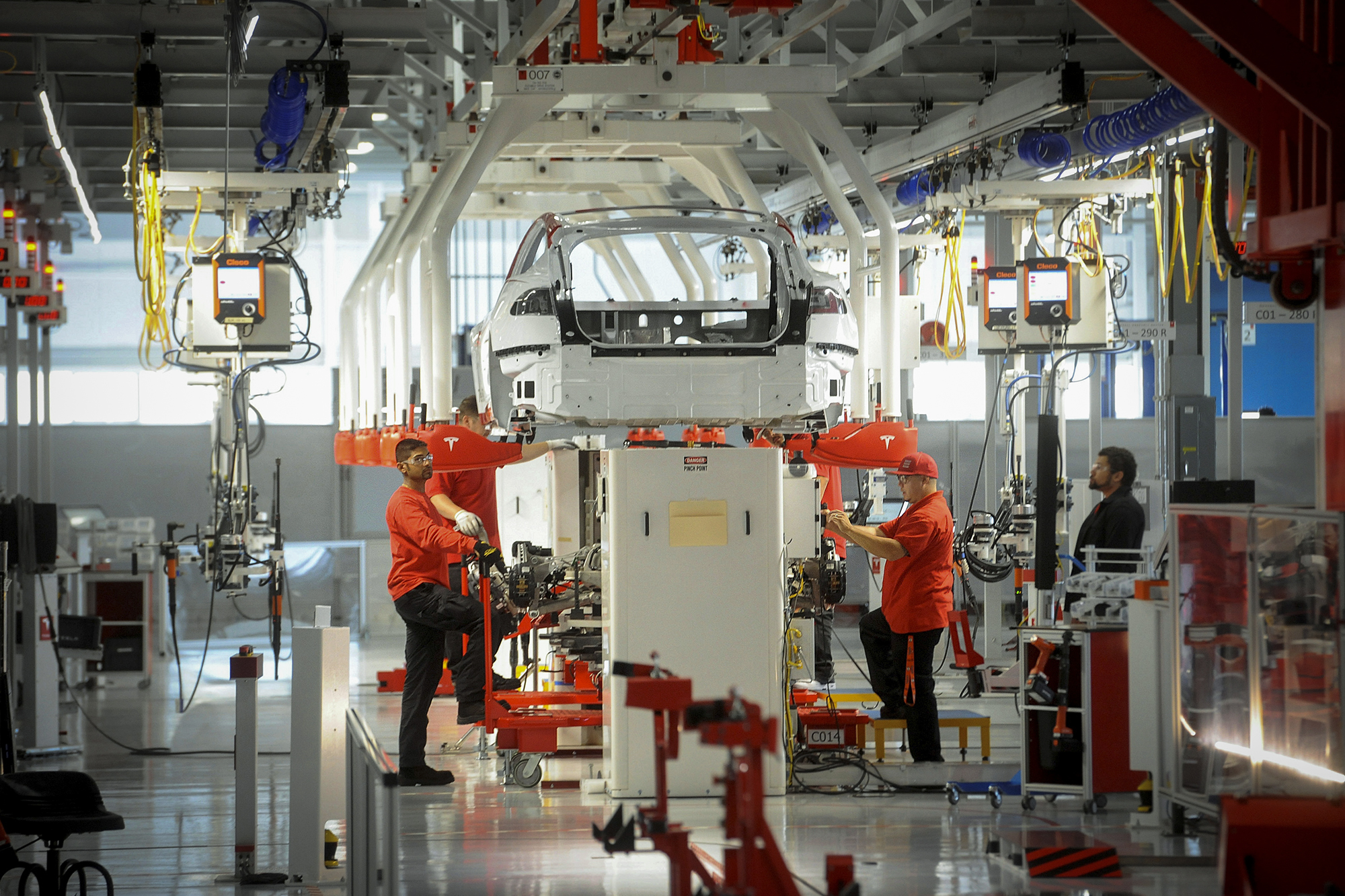
Lawmakers rushed to pass proposals exempting developments from environmental review, including housing, health clinics, food banks and advanced manufacturing.
The idea was to incentivize innovative clean energy businesses that would advance the state’s climate goals. But in their haste, lawmakers pulled the definition of “advanced production” from the California Resource Code. The language was intended to identify businesses that qualify for tax incentives rather than set environmental policy.
The definition includes everything from aerospace and electric vehicle manufacturing to excavation and chemical recycling.
Amid concerns from lawmakers on the environmental impact, McGuire promised fixes and the proposals were accepted. But before the session ended, McGuire and Assembly Speaker Robert Rivas, D-Salinas, couldn’t agree on how to address those concerns.
Connolly proposed a narrower measure — exempting only semiconductor equipment — before the legislative recess. It was postponed late last year.
Under Blakespear’s proposal, only facilities in the final stages of manufacturing the product would qualify for the exemption. The draft law excludes processing of raw materials and intermediate production. This includes the production of PFAS, a group of toxic chemicals linked to cancer and water pollution. Exempt facilities will have to meet certain climate, environmental and workforce goals.
The bill would block the exemption for businesses located too close to a disadvantaged community or places where vulnerable people live and work. Where air pollution is already excessive, facilities will undergo a full environmental review.
The proposal also reinstates some classic CEQA requirements for exempt facilities. Those that will affect tribal resources will have to consult with the tribes for their development.
Last year’s reforms also exempted day care centers in industrial zones from environmental review — the opposite of what lawmakers intended. Blakespear’s proposal would limit the exemption to day care centers offered in residential areas instead.
So far, two advanced manufacturing facilities have qualified for a CEQA exemption under current law: Google’s quantum computing facility in Goleta and an R&D facility in Livermore that is testing fusion power as a clean energy source. Both facilities have requested an advanced manufacturing exemption; it is unclear whether they would have gone through a more involved environmental review before last year’s reforms.
But industry and environmental groups disagree on how broadly the exemption should apply going forward.
“We’re trying to plan for advanced manufacturing to be in that category of one of the things we want to drive, especially around the energy transition and the green energy future,” Blakespear said.
Lance Hastings, CEO of the California Manufacturing and Technology Association, said streamlining the advanced manufacturing process will keep investment, innovation and jobs in California.
“Facilities classified as advanced manufacturing already operate under some of the strictest environmental, workplace safety and public health regulations in the world, even with the CEQA streamlining passed last year,” Hastings said in an email. “We have serious concerns about proposals that would undermine last year’s reforms.”
Raquel Mason, senior legislative manager at the California Alliance for Environmental Justice, said that while California already has strong environmental regulations, CEQA gives communities a formal role in deciding whether and how a facility is built near them.
“It allows us to be on the same playing field as these projects that have a lot more money and a lot more political capital than the environmental justice communities,” Mason said. “CEQA says ‘My voice is as important as yours.’

Adrian Covert, senior vice president of public policy for the Bay Area Council, which represents businesses in the region, said California needs to become more competitive in manufacturing if it wants to meet its climate goals.
“We have an opportunity to decarbonize manufacturing in the United States by moving manufacturing to California and by making it easier to build manufacturing (facilities) in California,” he said.
An example of a company choosing to leave the state is Resinergya chemical recycling company that pitched its technology as a solution to California’s plastic waste problem. The company claims it can chemically heat the plastic to make an oil that can be used to make new plastic, a process that researchers say generates toxic emissions. Resynergi chose to move to Texas after community pushback and questions from air regulators.
For Covert, this proves that California is driving innovation away. For environmental justice groups, however, the legacy of poorly vetted facilities like Exide weighs heavily.
“It’s unclear whether the net benefit of putting these projects online immediately without review will outweigh the huge negative health impacts they could have,” Mason said.
The state’s environmental review law is wildly popular with voters. A recent survey of 600 Californians by a political research firm FM3 Research, found that 72 percent of voters approved of it, and two out of three respondents opposed exempting advanced manufacturing facilities from its requirements. Nearly as many — 64 percent — said they were less likely to support a state legislator who supports such exemptions.
The bill has a long way through the Legislature, with all parties saying they are open to a compromise — but far apart on the details.
“How do we put this in a place that is as protective as possible for communities and workers?” Mason said. “Because we also want economic development in the state. It just can’t be a free environmental review season.”
This article was originally published on CalMatters and is republished under Creative Commons Attribution-NonCommercial-No Derivatives license.