Physical Address
304 North Cardinal St.
Dorchester Center, MA 02124
Physical Address
304 North Cardinal St.
Dorchester Center, MA 02124
from Alejandro LazoCalMatters

This story was originally published by CalMatters. Sign up for their newsletters.
Three years ago, California built the nation’s first system aimed at protecting drivers when the oil markets turn disastrous. The legislature passed it. Governor Gavin Newsom signed it. He declared that “California stood up to big oil and won.”
Its author, then-Sen. Nancy Skinner called it “landmark legislation” that “will allow us to hold oil companies accountable if they pad their profits at the expense of hardworking families.”
But the law, which gives regulators the power to limit refiner profits and penalize oil companies for raising prices, has never been used. Instead, last year the California Energy Commission voted to delay the rules for five years. Skinner — who wrote the law as a senator — was absent when her own committee voted to delay it.
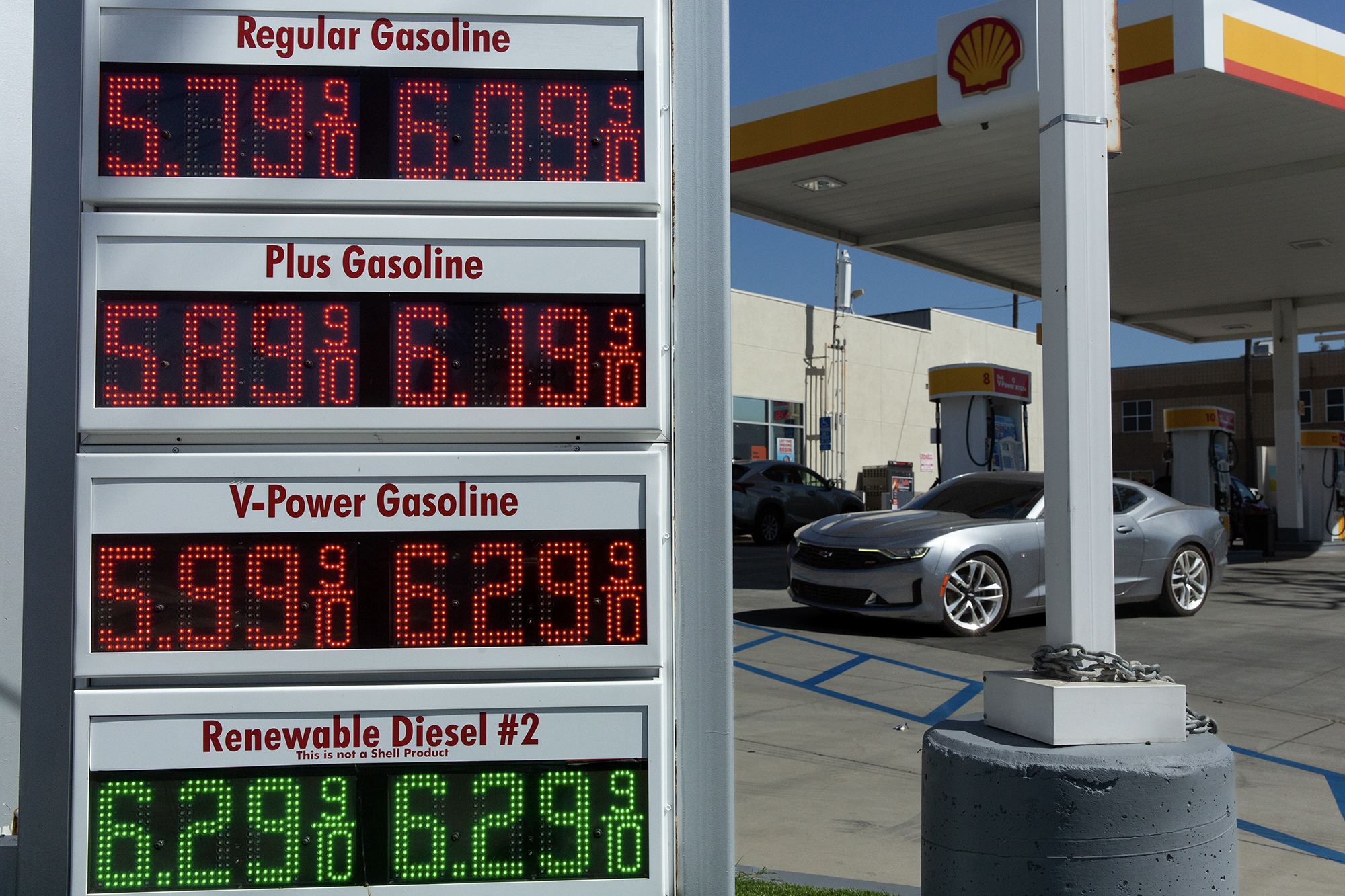
Now with gas reaching $5.30 per gallon in the state, this decision is under the light of new spotlights. The Iran war sent world oil prices soaring, but the war is only part of the story. California has a structural problem: fewer refineries, a closed market, and a lack of easy outside supply options. When prices go up nationally, they can go up even more here.
Supporters say that’s exactly the time the 2023 law was created for. Commissioners last year left the door open to overturning the delay — and moving forward with the five-year-old rule — if they change their minds.
“These are the times we need them because when the price of a commodity goes through the roof — whether it’s crude oil or refined gasoline — that’s when companies make outrageous profits,” said Jamie Court, president of Consumer Watchdog.
But those who supported the delay say it’s a necessary concession — that penalizing refiners risks driving them out of the state entirely. It’s a tension that goes to the heart of California’s energy predicament: how to protect consumers today from an industry the state still can’t afford to lose while making good on its promise to abandon that industry.
When the California Energy Commission met last August, Newsom was already backing away from his confrontation with the oil industry. The question before commissioners was whether to move forward with aggressive rules targeting refiner profits — or back off. as the governor did.
It was a sharp turn. Newsom had stated special legislative sessions in 2022 and 2024, pushing through broad new powers to limit spikes in gasoline prices — including requirements for refiners to store more fuel and replace supplies lost during maintenance, and profit cap rules that are now inactive. A new Energy Commission oversight division created by the law found an unexplained gasoline premium of about 41 cents a gallon between 2015 and 2024, costing motorists approximately $59 billion.

“These are critically important laws,” said Cassie Siegel, director of the Climate Law Institute at the Center for Biological Diversity. “This information shows that Californians are at the mercy of very few refineries with huge capacity.”
California’s oil industry has strongly opposed the measures, and some economists remain skeptical. UC Berkeley energy economist Severin Borenstein warned that limiting refinery profits during shortages could backfire.
“The last thing we need is to start trying to regulate refinery margins,” he said. “As much as people don’t like high gas prices, they really, really hate pipelines.”
By last August, refinery shutdowns were looming and warnings of $8-a-gallon gasoline were circulating in Sacramento. Newsom and Democratic leaders negotiated with the oil industry to increase production in Kern County — talks that led to legislation that has since increased drilling permits.
After Valero said it would close its Benicia refinery, Newsom directed Siva Gundavice chairman of the California Energy Commission, to “redouble the state’s efforts to work closely with refiners on short-term and long-term planning” and ensure a “reliable supply of transportation fuels.” Gunda replied with a series of recommendations it was largely in line with the industry’s wishes — among them a pause in the state’s profit cap rule.
Against this background, the energy commissioners voted on 29 Aug to delay the rules by five years. Ahead of the vote, Gunda said the postponement would help boost “investor confidence” in the state’s oil refineries, “thereby ensuring reliable refining capacity in the state.”
Oil industry officials say the decision made sense — they argue the profit-limiting measures miss the real problem.
“The real problem is that California is an energy island — we’re losing 17 percent of our refining capacity,” said Zachary Leary, a lobbyist for the Western States Petroleum Association.
But Consumer Watchdog’s Court said the governor had “panicked,” leaving the state without the “hammer” it now needs.
“When you have that level of gas, you’re going to need these tools,” Cort said.
California has committed to phase out fossil fuels by 2045, but it still depends heavily on gasoline and is losing the refineries that produce it.
Phillips 66 last year closed its Los Angeles refinery, citing concerns about the sustainability of the California market. Valero is closing its Benicia refinery next month, signaling a challenging regulatory environment.
“If you start losing refineries — as we will — and you don’t have an alternate source of supply, we’re going to start getting price spikes when there’s any disruption at one of our refineries,” Borenstein said. “Or only during periods of high demand.”
The challenge of reducing the use of fossil fuels while maintaining an adequate supply has created what Gunda — Newsom’s man in negotiations with the oil industry — calls the “middle transition.”
“It’s not going to be a smooth transition,” Gunda said last month in testimony before a state Senate committee. “Every time you lose a refinery, that’s going to be a double-digit percentage of refined fuel lost in California. So this sharp transition is going to mean a sharp increase in imports.”
The recent spike in gasoline prices reflects a global oil shock linked to the Iran war — not a policy change unique to California, experts said. But the jump underscores how exposed the country remains to global energy markets as it loses refining capacity and imports more crude oil and gasoline.
Since the conflict began, the international benchmark for crude oil has risen more than $25 a barrel, a change that typically translates to about 60 cents a gallon at the pump, in line with the increase in retail prices in California, UC Berkeley’s Borenstein said.
“All of the change we’ve seen over the last few weeks has been consistent with the change in crude oil prices and therefore not specific to California,” he said.
Newsom made a similar argument, blaming the thorn about global oil markets and the war with Iran, not about California politics. But analysts note that the state’s shrinking refining base means global shocks hit harder here than elsewhere.
A major concern is the Strait of Hormuz. Before the conflict, the narrow waterway carried more than 20 million barrels of oil per day — roughly one-fifth of the world’s supply. Traffic is already at a standstill, and crude oil prices are back above $100 a barrel – even after more than 30 countries announced release from emergency reserves.
Ryan Cummings, chief of staff at the Stanford Institute for Economic Policy Making, said a prolonged shutdown could push crude oil prices above $130 or $140 a barrel — which would push prices in California closer to $7, with a worst-case scenario reaching $10 at some stations.
Most analysts consider that outcome unlikely, but no longer inconceivable.
“It doesn’t seem likely right now, but it’s a worst-case scenario that’s growing by the day,” Cummings said.
Siegel of the Center for Biological Diversity said California should immediately move to implement profit-limiting rules and require companies to hold larger fuel inventories.
“Our leaders must not rest until the rules are in place to prevent price increases on top of volatility, and they must not rest until people get their money back,” she said.
Economists say California’s biggest challenge may be infrastructure. Valero plans to close its Benicia refinery, which produces about 10 percent of the state’s gasoline, next month. In an analysis published last yearStanford economist Neil Mahoney and Cummings said California could make up for lost refinery production with gasoline imports — if the permit allowed refineries like Benicia to become fuel import terminals. Newsom said in January that his administration was work with the company to continue importing gasoline into Northern California after the refinery shut down operations.
“If I were in the Legislature right now, all my energy and efforts would be focused on, first, making sure that Benicia is turned into an import terminal — and second, making sure that whoever owns or operates it is out of business,” Cummings said.
Court, of Consumer Watchdog, pointed out suggested Phillips 66 conduit that could bring refined gasoline from Midwestern refineries into the state—something California never had, relying instead on in-state refining and imports from the sea. Called the Western Gateway Pipeline, the project would build a new pipeline and reverse an existing one to move gasoline and diesel from central US refineries to Arizona and California.
One state legislator has proposed expanding access to E85cheaper ethanol blend. Both ideas remain proposals without clear deadlines.
Meanwhile, some oil companies and even some Democrats warn that California’s climate policies could drive up production costs enough to make refiners rethink their operations in California — adding another pressure point to an already tight supply picture.
The profit cap rules that could penalize oil companies remain in place until 2029. By then, California may have lost more refineries — and may still be grappling with the problem Newsom promised to solve: gasoline price shocks in the nation’s most inaccessible market.
This article was originally published on CalMatters and is republished under Creative Commons Attribution-NonCommercial-No Derivatives license.





