Physical Address
304 North Cardinal St.
Dorchester Center, MA 02124
Physical Address
304 North Cardinal St.
Dorchester Center, MA 02124
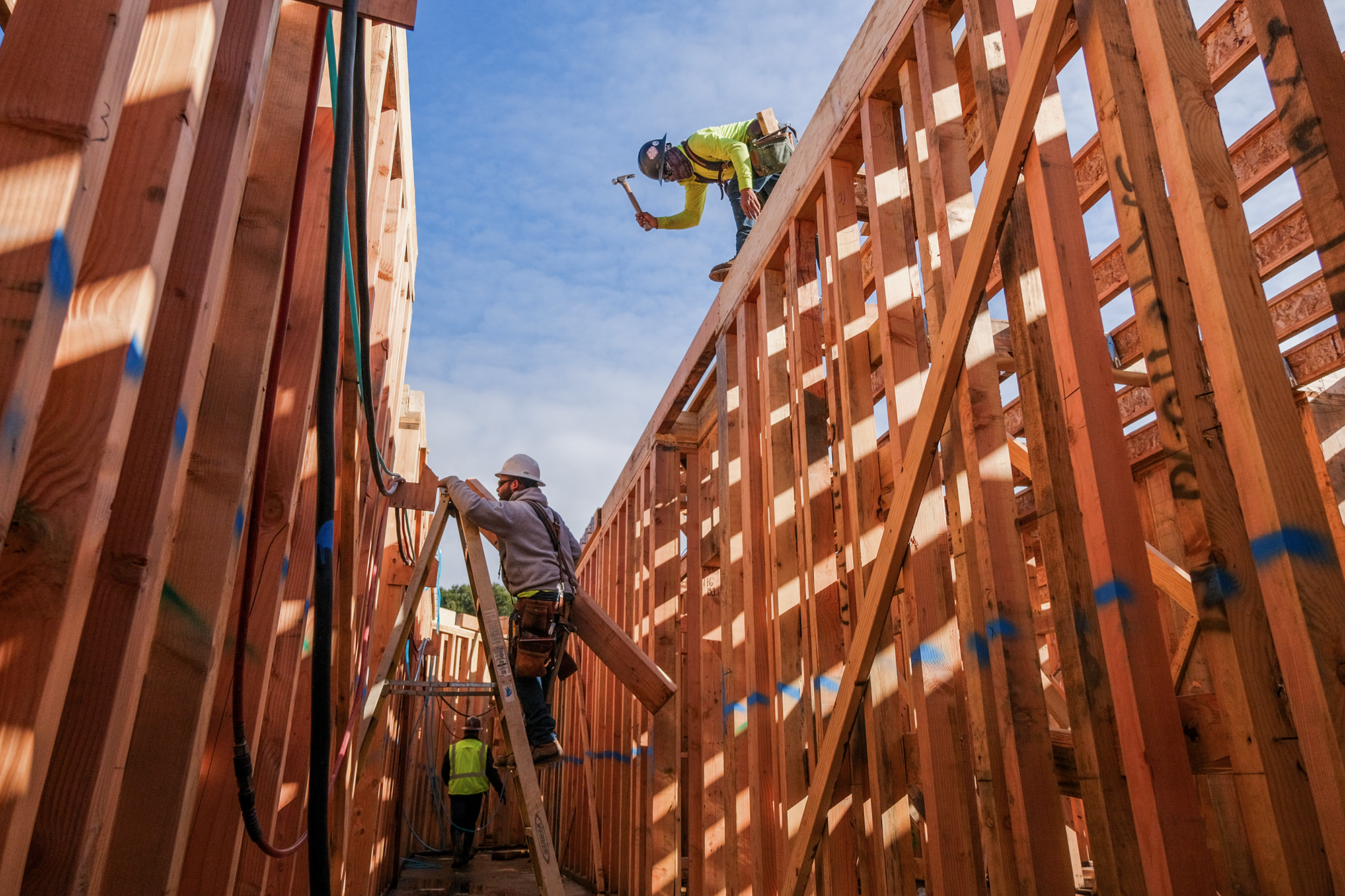
from Ben ChristopherCalMatters

This story was originally published by CalMatters. Sign up for their newsletters.
An apartment building planned for East Morris Avenue in Modesto is exactly what California’s political leaders want to see a lot more of: The project promises 44 affordable units – half reserved for the homeless. It received zoning approval, overcame public backlash, won the support of local elected officials and sits next to a busy bus line. Once built, the project promises on-site mental health services, job training and Zumba classes.
What the project lacks is money.
After putting together a financial mix of local government and corporate grants, private debt and a plot of land donated by a foundation, it remains just shy of the total needed to break ground.
Six years and 13 funding applications after its original proposal, the Morris Village project is ready, but waiting.
An estimated 39,880 affordable units across California are stuck in financial purgatory, according to new report by Enterprise Community Partners, a national nonprofit that funds, advises and advocates for affordable housing. That’s 461 “shovel-ready developments” that, like East Morris’s, are fully designed, legally blazed and backed by a significant but still insufficient amount of money.
Many “have been sitting for a year or two waiting for funding,” said Justin Marcus, policy director for Enterprise’s Northern California office and one of the report’s co-authors. “There’s no exit route right now. It’s a tight spot.”
For many developers and affordable housing advocates, this bottleneck represents a particularly frustrating inconsistency of public policy in California. Lawmakers are desperate to see the state build more homes — of all kinds, but especially for people least able to pay the state’s exorbitant rents. State housing regulators have ordered local authorities to plan the construction of an additional 2.5 million units by the end of the decade. One million of those are estimated to be for people making less than 80% of each region’s median income.
As a general rule, this is a population of distressed tenants that the private market has not been able to profitably serve at scale. To fill this gap, low-income nonprofit housing developers typically turn to taxpayer-funded support. Right now, according to the report, that’s not enough to go around.
Enterprise obtained publicly available but difficult-to-analyze lists of applicants from seven grant programs administered by various branches of California state government dating back three years. With a combination of number crunching and few conclusions, the report estimates that clearing the current backlog would require an additional $4.1 billion, split between state-administered grants, cheap loans and tax write-offs.
Once granted, this final layer of government subsidy must be spent in a relatively short period. That means that list of 39,880 units includes a group of affordable housing projects that are nearly ready to go, Marcus said. “They should have their (things) together.”
Example: Two-thirds of the projects on the list have already received support from at least one other government program. Those dollars aren’t awarded to every entrepreneur, said Betsy McGovern-Garcia, vice president of Self-Help Enterprises, one of two nonprofits behind Morris Village.
“These are all projects that are close to amenities,” she said. “These are all projects providing local services. These are all projects that are financially feasible. … They all meet the bar for what we want to see as a state out of our affordable housing community.”
In February, McGovern-Garcia and her colleagues applied for a final round of state funding “to close the gap” and finally begin construction.
“We’re optimistic that this could be our go-round,” she said in an interview with her fingers crossed.
California has seen bottlenecks in the production of affordable housing before, but the exact location of the bottleneck has changed over time.
When Nevada Merriman led a team of affordable developers in Silicon Valley a decade ago, she said local approval was the main obstacle. Getting legal approval to build low-income housing on a specific site in a specific city requires developers to run a gauntlet of planning department and city council meetings, win over hostile neighbors with expensive rebates, community meetings and design revisions, and fend off the ever-present possibility of litigation. Because relatively few projects survived that ordeal, the competition for funding from the other side wasn’t particularly strong, said Merriman, who is now a policy advocate for MidPen Housing, an affordable housing developer in San Mateo County.
That began to change earlier this decade. California lawmakers have begun passing laws overturning these local barriers — especially for affordable projects. Suddenly, more projects cleared those early regulatory hurdles and competed for Low-Income Housing Tax Credits, the federal government’s signature affordable-housing construction subsidy. The bottleneck moved further up the road.
But that, too, began to change late last year. Buried in President Donald Trump’s 2025 tax bill was a a significant boost to the tax credit program. (Specifically, the law increased the total supply of one type of credit while allowing another type to be spread over twice as many projects).
Which brings us to the final bottleneck.
Projects can now go through local approval. They can more easily acquire the last and most important layer of federal funding. But project sponsors usually can’t apply for it until all other funding holes are plugged.
“We’re looking at state sources to fill that gap,” Merriman said. “We want to make sure we don’t leave those federal sources on the table.”
MidPen currently has 1,198 units spread across seven developments awaiting the final installment of financing, she said. “If there’s a source … there’s a pipeline that’s ready to go.”
“There’s no exit route right now. It’s a tight spot.”
Justin Marcus, Northern California Policy Director, Enterprise Community Partners
The last major infusion of affordable public housing dollars in California came in the form of a voter-approved bond in 2018. This well has run dry. A mix of financial flows remains.
Adding funding already approved by lawmakers but not yet spent and various other state and federal sources, the California Department of Housing and Community Development says at least $1.8 billion should be available to affordable developer applicants this year. Gov. Gavin Newsom’s budget proposal for next fiscal year doesn’t include any new discretionary spending beyond that.
Accelerators for more funding have reason to be optimistic. Newsom has taken such a tough line in early budget talks before only to have the Legislature successfully spill hundreds of millions dollars of affordable housing subsidies back into the final budget agreement.
California lawmakers are also considering setting a record $10 billion in affordable housing bonds for the 2026 election. If a majority of voters support it, “we’ll be in the running,” Merriman said.
One way to get more affordable housing is by spending more money. The other is trying to make existing money go further by cutting costs.
Affordable housing costs sky high in California: 2025 study estimates tax credit-financed projects here cost two to four times more of comparable projects in Colorado and Texas. There is no single reason for this discrepancy. Land costs in California are significantly higher. So is often the cost of labor. Regulatory barriers such as restrictive zoning, slow resolution and stiff impact fees are often pointed to as the culprits. Sometimes old-fashioned construction methods and materials be accused.
But there is also the cost of simply waiting.
A typical affordable project in California will have two or three public funding sources, with some using six or more. Many of these sources are awarded on their own schedules. Each has its own program-specific requirements, which may take time to meet. Some depend on receiving others. Over time, developers still have to make payroll, pay interest on pre-construction loans, and watch inflation push construction costs even higher. As delays mount, sources of funding that have already been secured may run out, further setting things back.
Each additional source of financing delays the start of construction on a project by an average of four months, adding an additional $20,460 per unit, according to an analysis by Turner Center for Housing Innovation at UC Berkeley.
The Newsom administration is currently tinkering under the hood with California’s affordable housing financing system in an effort to speed things up.
Last year, the governor proposed the creation of the first ever state cabinet level housing agency. The California Housing and Homelessness Agency is slated to take over the state’s separate housing loan and grant programs. The governor’s office, too proposed legislative language it would force the new agency and the Treasurer’s Office to work in tandem, giving affordable housing developers one place to apply for various state funding programs — and cutting out some of the time they spend in line.
This article was originally published on CalMatters and is republished under Creative Commons Attribution-NonCommercial-No Derivatives license.


