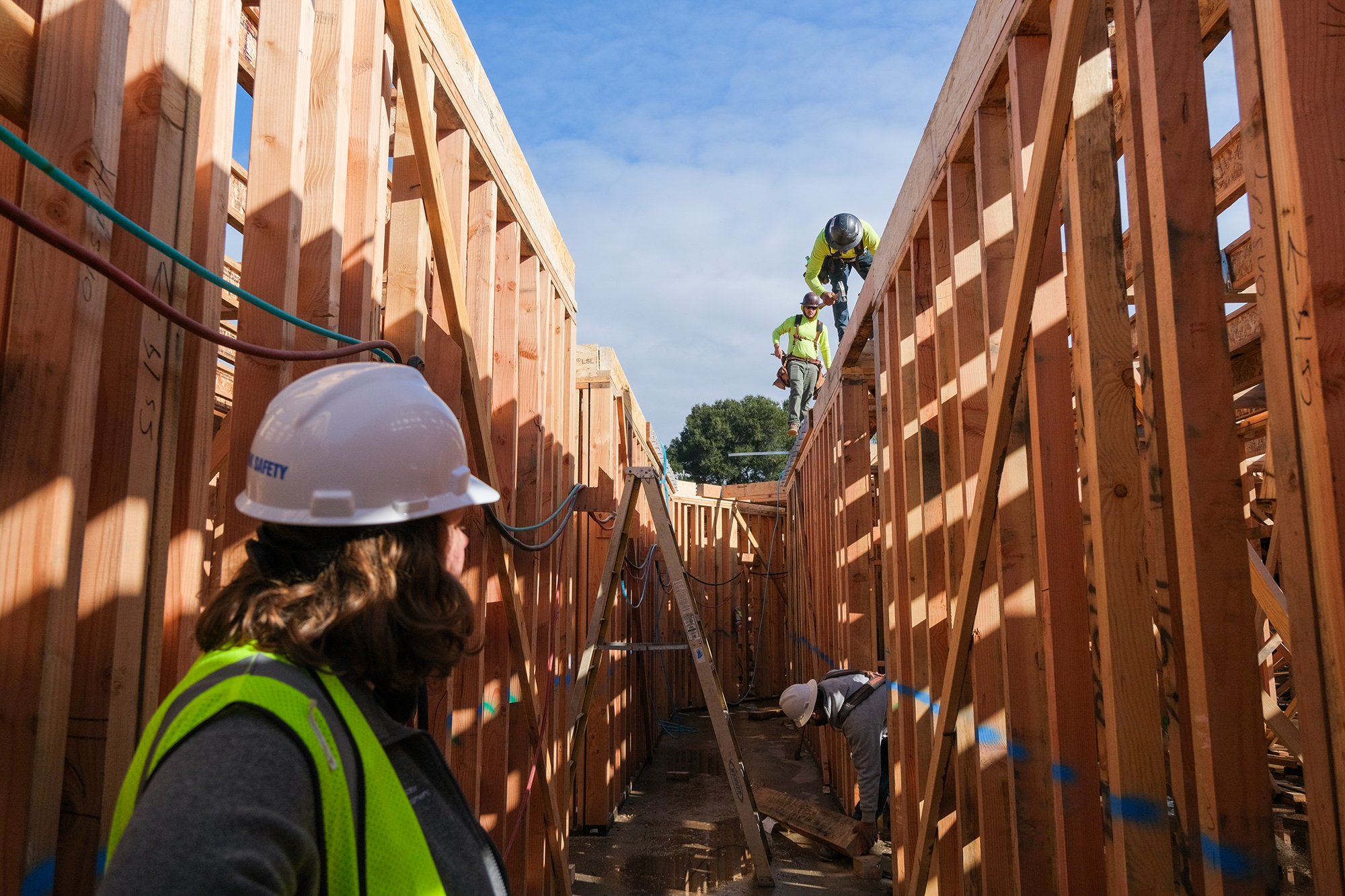
<!-- Creative Commons Attribution-NonCommercial-NoDerivatives https://creativecommons.org/licenses/by-nc-nd/4.0/ --></p> <p>from <a href=""https://calmatters.org/author/ben-christopher/"" title=""Posts" by="" ben="" christopher="" class=""author" url="" fn="" rel=""author"">Ben Christopher</a>CalMatters</p> <figure> <img decoding="async" width=""1200"" height=""800"" src=""https://i0.wp.com/calmatters.org/wp-content/uploads/2025/04/020624_No-Place-Like-Home_CC_CM_25.jpg?fit=1200%2C800&ssl=1"" class=""attachment-post-thumbnail" size-post-thumbnail="" wp-post-image="" alt=""Construction" workers="" wearing="" yellow="" safety="" vest="" stand="" on="" top="" of="" a="" wooden="" construction="" for="" an="" apartment="" building.="" person="" gear="" can="" be="" seen="" in="" the="" foreground="" looking="" up="" at="" workers.="" decoding=""async"" srcset=""https://i0.wp.com/calmatters.org/wp-content/uploads/2025/04/020624_No-Place-Like-Home_CC_CM_25.jpg?w=2000&ssl=1" https:="" sizes=""(max-width:"/><figcaption>Developers work on the Ruby Street Apartments in Castro Valley on February 6, 2024. The construction project is funded by the No Place Like Home bond, which was passed in 2018 to create affordable housing for homeless residents who have mental health issues. Photo by Camille Cohen for CalMatters</figcaption></figure> <p>This story was originally published by <a href=""https://calmatters.org/"">CalMatters</a>. <a href=""https://calmatters.org/subscribe-to-calmatters/"">Sign up</a> for their newsletters.</p> <p>Maybe it was the re-election of Donald Trump and the electorate’s anger at inflation. Perhaps it was the surprising success of a <a href=""https://www.politico.com/news/2025/03/27/california-abundance-craze-00253159"">book on permit reform</a> among liberal elites. Maybe it was just the cumulative fascination with California’s inaccessibility. </p> <p>Whatever the reason, 2025 was the year California’s Democratic lawmakers finally got serious about construction. </p> <p>Over the summer, state lawmakers passed a law <a href=""https://calmatters.org/housing/2025/06/ceqa-urban-development-infill-budget/"">freeing up most urban housing</a> from the threat of environmental litigation. A few months later they passed a bill <a href=""https://calmatters.org/housing/2025/10/newsom-signs-massive-california-housing-overhaul/"">residential buildings with green lighting</a> near major public transport stops due to local objections. Both bills aim to push the state to build its way out of a <a href=""https://calmatters.org/housing/2025/09/california-housing-shortage/"">chronic housing shortage</a>both are long-standing items on the Yes in the Backyard movement’s wish list, and both were gleefully signed into law by Gov. Gavin Newsom. Other, less significant legislation aimed at speeding up construction also passed both chambers this year.</p> <p>Ushering in the era of housing glut? Probably not. This year’s historic policy shift may push in one direction, but high interest rates, unpredictable tariffs and high labor costs are pushing in the other. Plus it just takes a long time to build things.</p> <p>Despite a boom year in construction bills, it was a bit of a legislative setback for those looking for immediate help with housing costs. The legislative year did not <a href=""https://calmatters.org/housing/2025/06/california-renters-rights-bills-2025/"">offer a great deal for existing tenants</a>. Nor did he take a <a href=""https://calmatters.digitaldemocracy.org/bills/ca_202520260ab736"">proposed bond measure</a> designed to supplement one of the state’s affordable housing funds. Although affordable housing developers have secured a long-sought after <a href=""https://calmatters.org/housing/2025/08/affordable-housing-trump-ca/"">increase in federal support</a> of President Trump’s signature spending bill, the administration is also seeking to <a href=""https://calmatters.org/newsletter/trump-homeless-funds-cuts/"">cut costs</a> for permanent housing of the homeless. </p> <h2>Outlook for 2026 </h2> <p>All of this gives lawmakers plenty of room to come back in 2026. Whether to bring the bond back in time for the November election is likely to dominate the debate in January. YIMBYs aim to push more to cut development costs, and tenants’ rights group likely will <a href=""https://calmatters.org/newsletter/rent-cap-ab-1157-newsletter/"">call again</a> for tighter rent caps and tenant protections. But as Election Day nears, the appetite for controversial votes wanes. </p> <p>This article was <a href=""https://calmatters.org/housing/2025/12/housing-2025-in-review/"">originally published on CalMatters</a> and is republished under <a href=""https://creativecommons.org/licenses/by-nc-nd/4.0/"">Creative Commons Attribution-NonCommercial-No Derivatives</a> license.</p> <p> Copy the HTML